231/2 · BIOLOGY (Theory) · Paper 2 · Mar. 2022 (KCSE 2021) · 2 hours
Instructions: This paper consists of two sections, A and B. Answer all the questions in section A. In section B answer question 6 (compulsory) and either question 7 or 8.
Section A (40 marks)
1. The photograph below shows an organism from a certain Class of organisms.
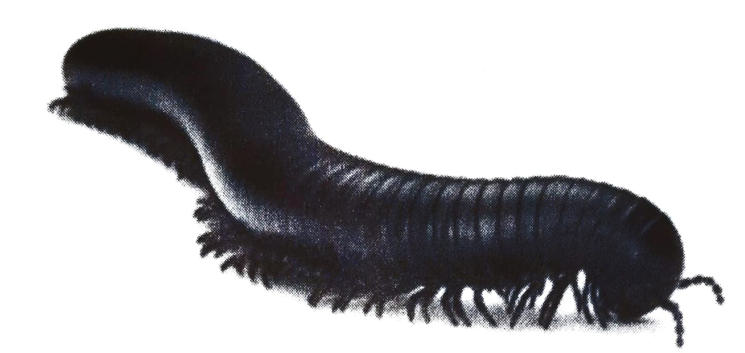
(a) (i) Name the Class to which the organism belongs. (1 mark) (ii) Using observable features from the photograph, state two reasons for your answer in 1(a)(i). (2 marks) (iii) State two ways in which the organism is important to the environment. (2 marks)
(b) (i) Name the Kingdom to which bacteria belong. (1 mark) (ii) Name two bacterial diseases in human beings. (2 marks)
2. (a) State two adaptations of the frog's skin to gaseous exchange. (2 marks)
(b) Explain how the human nasal cavity is adapted to gaseous exchange. (3 marks)
(c) Explain why the amoeba does not require an elaborate gaseous exchange system. (2 marks)
(d) Name the respiratory disease caused by Bordetella pertussis. (1 mark)
3. The diagram below shows a section through the mammalian skin.
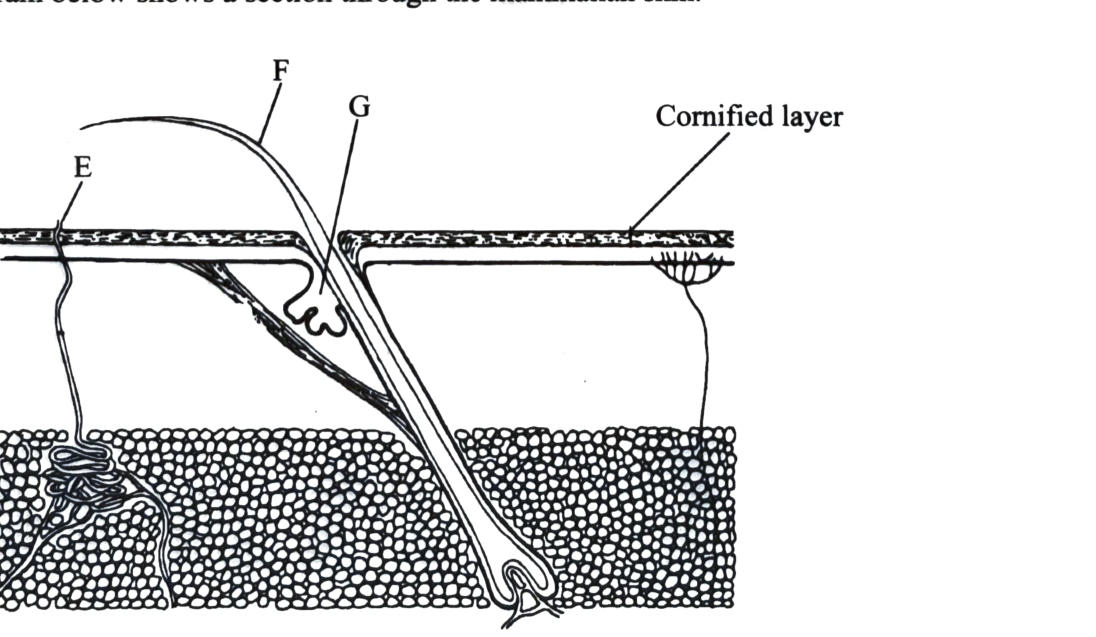
(a) (i) Name the substance produced by the part labelled G. (1 mark) (ii) State two functions of the substance named in 3(a)(i). (2 marks)
(b) Name the part labelled E. (1 mark)
(c) Explain the function of the part labelled F to the mammal. (2 marks)
(d) (i) Name one part of the human body where the cornified layer is thickest. (1 mark) (ii) Give a reason for your answer in 3(d)(i). (1 mark)
4. (a) Two dogs with black fur mated and produced offspring with both black and brown fur. Given that letter N represents the gene for black fur, determine the genotypic ratio and phenotypic ratio of the offspring. (5 marks)
(b) The photographs below show a hairy pinna in a human ear.

(i) Explain why this trait is only found in males. (2 marks) (ii) Name one other trait that only appears in males. (1 mark)
5. (a) State the role of sunlight in the formation of strong bones. (1 mark)
(b) The photograph below shows the dorsal view of a part of the mammalian vertebral column.
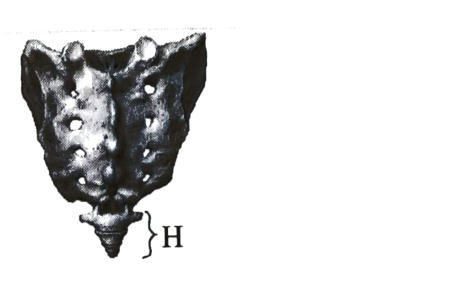
(i) Name the part of the vertebral column shown. (1 mark) (ii) Name the part labelled H. (1 mark) (iii) State three ways in which the vertebra shown is adapted to its functions. (3 marks)
(c) Explain the significance of movement in plants. (2 marks)
Section B (40 marks)
6. The table below shows the varying concentration of two hormones, progesterone and luteinising hormone, determined at seven-day intervals during the human menstrual cycle.
| Time (days) | 1 | 7 | 14 | 21 | 28 |
|---|---|---|---|---|---|
| Progesterone (mg/cm³ of blood) | 2 | 2 | 24 | 100 | 20 |
| Luteinising hormone (mg/cm³ of blood) | 46 | 40 | 100 | 84 | 40 |
(a) On the same axes, draw graphs of concentration of hormones against time. (8 marks)
(b) (i) Name the physiological process taking place when the concentration of luteinising hormone is highest. (1 mark) (ii) State the significance of the process named in 6(b)(i). (1 mark)
(c) (i) Determine the concentration of progesterone at which the endometrium is thickest. (1 mark) (ii) Explain your answer in 6(c)(i). (1 mark)
(d) State two roles of progesterone in humans. (2 marks)
(e) Name two sites where progesterone is produced in the human body. (2 marks)
(f) Name another hormone, apart from luteinising hormone, that stimulates the secretion of progesterone. (1 mark)
(g) (i) Predict the concentration of progesterone seven days after the study period if fertilisation did not take place. (1 mark) (ii) Give a reason for your answer in 6(g)(i). (1 mark)
(h) Name the part of the human body where luteinising hormone is produced. (1 mark)
7. (a) Explain the role of the placenta during pregnancy. (10 marks)
(b) Explain features and mechanisms that hinder self-pollination and self-fertilisation. (10 marks)
8. (a) Describe how the xylem tissue is structurally adapted to its functions. (5 marks)
(b) Describe the functions of blood in the human body. (15 marks)