231/1 · BIOLOGY (Theory) · Paper 1 · Dec. 2022 · 2 hours
Instructions: Answer all the questions in the spaces provided.
1. State two reasons why humans are not commonly used as specimens for genetic studies. (2 marks)
2. On the diagram of the root tip below, label the regions where: (a) cells become specialised, as E; (1 mark) (b) cells increase in size, as F. (1 mark)

3. (a) State two environmental conditions that can lead to the formation of carboxyhaemoglobin in the human body. (2 marks)
(b) Explain the effect of carboxyhaemoglobin in the human body. (2 marks)
4. State the significance of each of the following characteristics of the mammalian lungs: (a) being elastic; (1 mark) (b) having pleural fluid. (1 mark)
5. Below is a diagram of a bacterium.
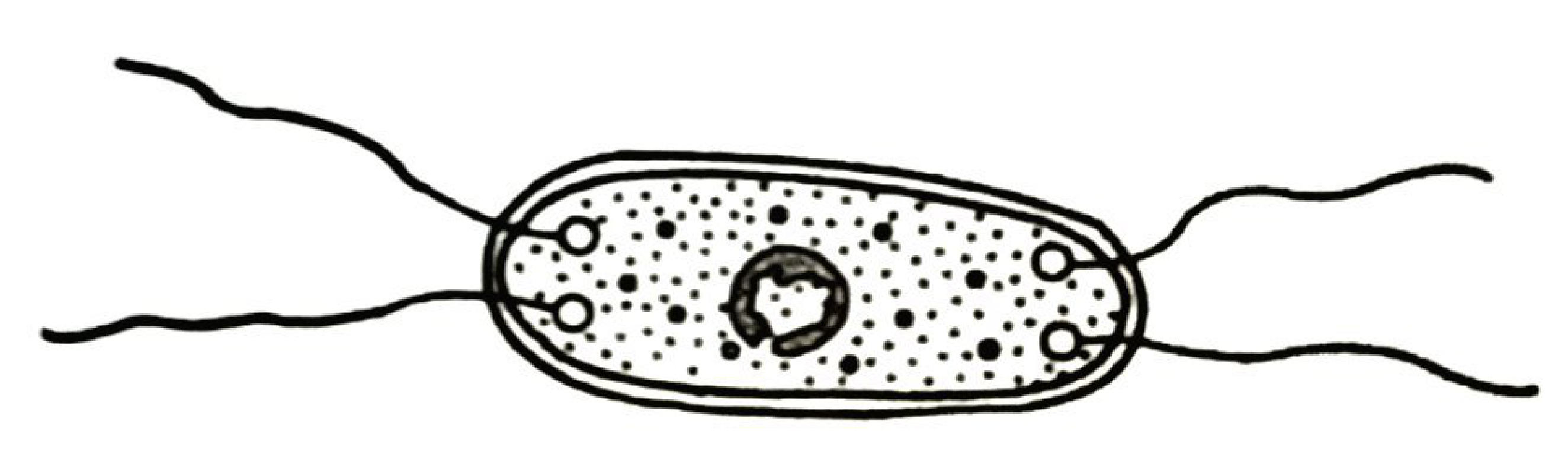
(a) Identify the kingdom to which the organism belongs. (1 mark)
(b) State two features shown on the diagram that are characteristic of this kingdom. (2 marks)
6. (a) Name the part of the ovule that forms each of the following structures after fertilisation: (i) zygote; (1 mark) (ii) testa. (1 mark)
(b) Name the hormone responsible for the development of a deep voice in humans. (1 mark)
7. (a) Differentiate between a population and a community as used in ecology. (1 mark)
(b) Explain one negative effect of the use of herbicides on human health. (1 mark)
(c) State two ways through which energy is lost from one trophic level to the next in a food chain. (2 marks)
8. The following apparatus is used in biological studies.

(a) Identify the apparatus. (1 mark) (b) State its function. (1 mark)
9. (a) Give two reasons why anaerobic respiration yields less energy than aerobic respiration. (2 marks)
(b) Explain why fats are not efficient respiratory substrates. (2 marks)
10. The table below shows the concentration in parts per million of sodium and iodide ions in sea water and in the cell sap of a plant.
| Sodium ions | Iodide ions | |
|---|---|---|
| Sea water | 326 | 39 |
| Cell sap | 162 | 574 |
(a) (i) Which of the two ions' intake will be affected if the plant was sprayed with a chemical that inhibits respiration? (1 mark) (ii) Explain your answer in 10(a)(i). (2 marks)
(b) An experiment was set up as shown in the diagram below.
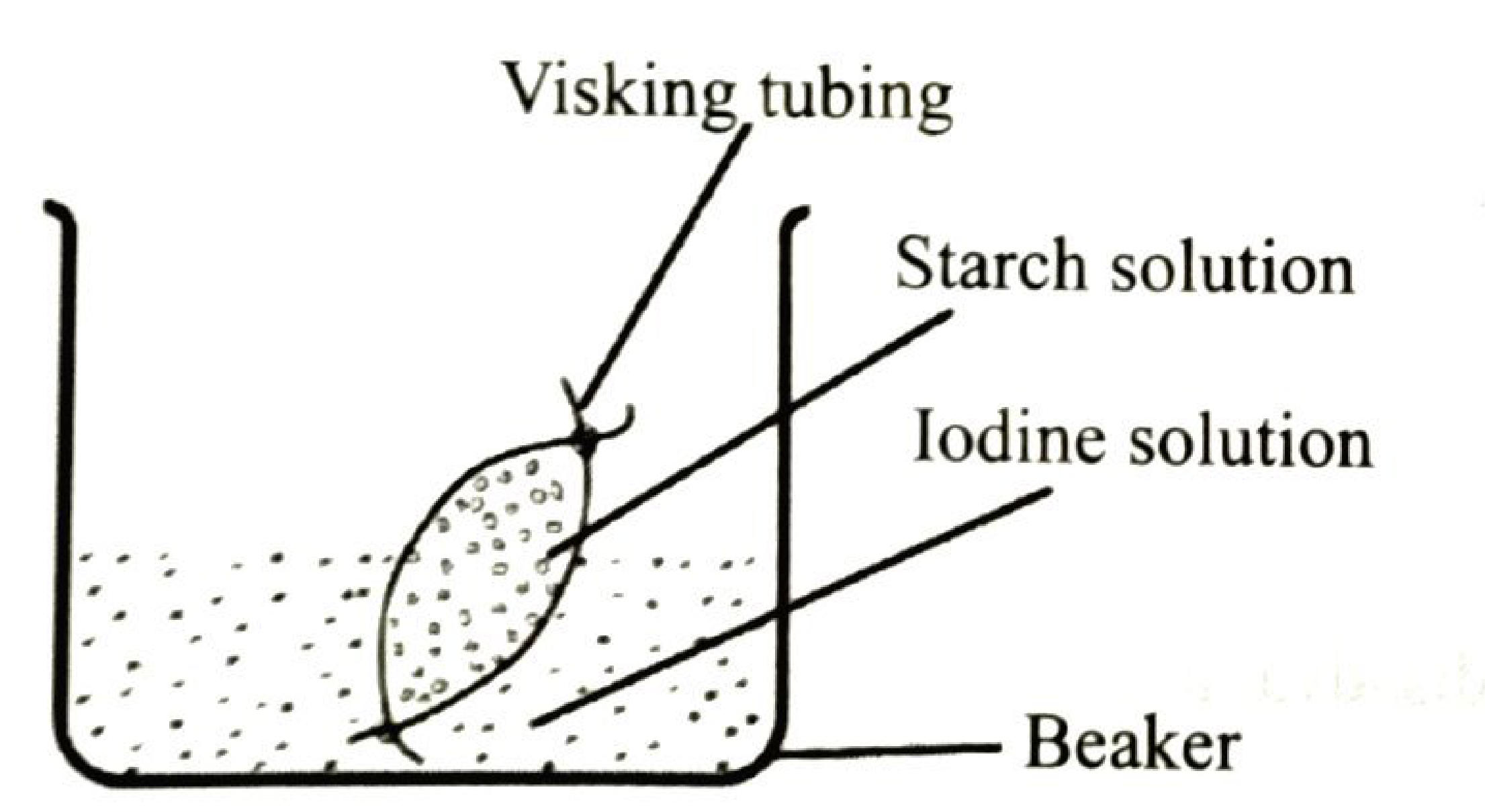
At the end of the experiment it was observed that the starch turned blue-black while the colour of the iodine solution in the beaker did not change. Account for this observation. (2 marks)
11. The diagram below represents a stage in cell division.
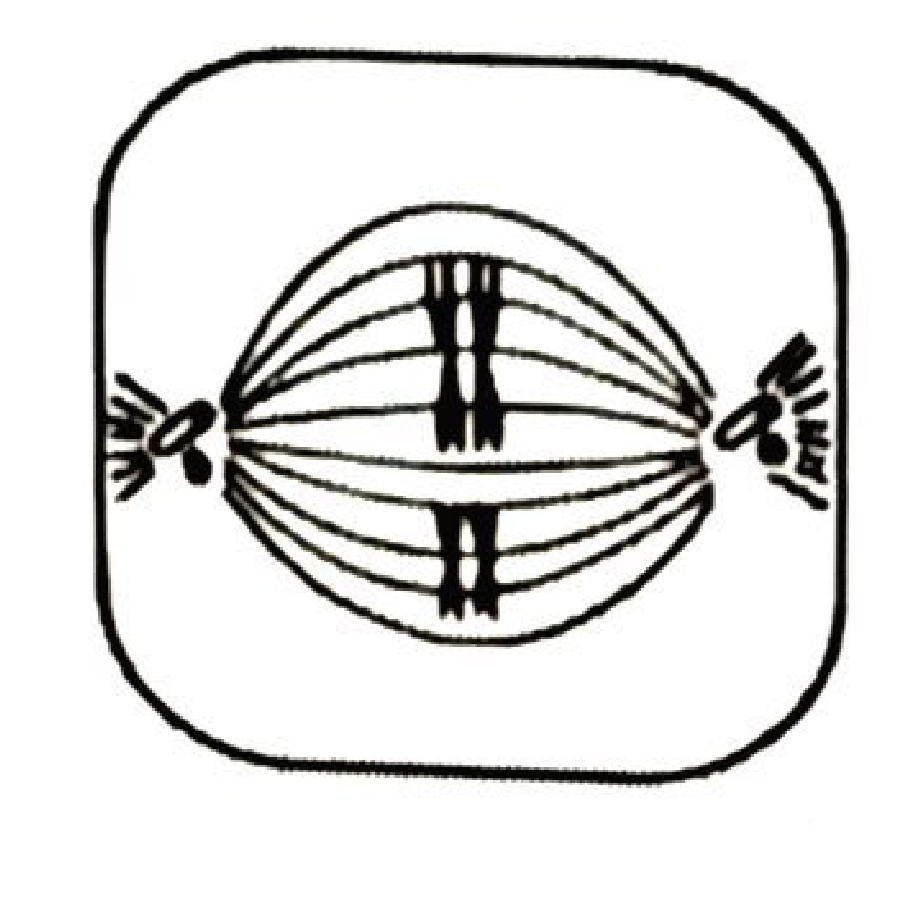
(a) (i) Name the stage of cell division illustrated. (1 mark) (ii) Give a reason for your answer in 11(a)(i). (1 mark)
(b) In the space below, illustrate the next stage of cell division after the one illustrated above. (1 mark)
(c) Explain the disadvantage of in-breeding among living organisms. (2 marks)
12. Explain why protozoans do not require an elaborate system of gaseous exchange. (2 marks)
13. The diameter of the field of view of a light microscope was found to be 1.5 mm. Cells observed under the field of view appeared as shown below.
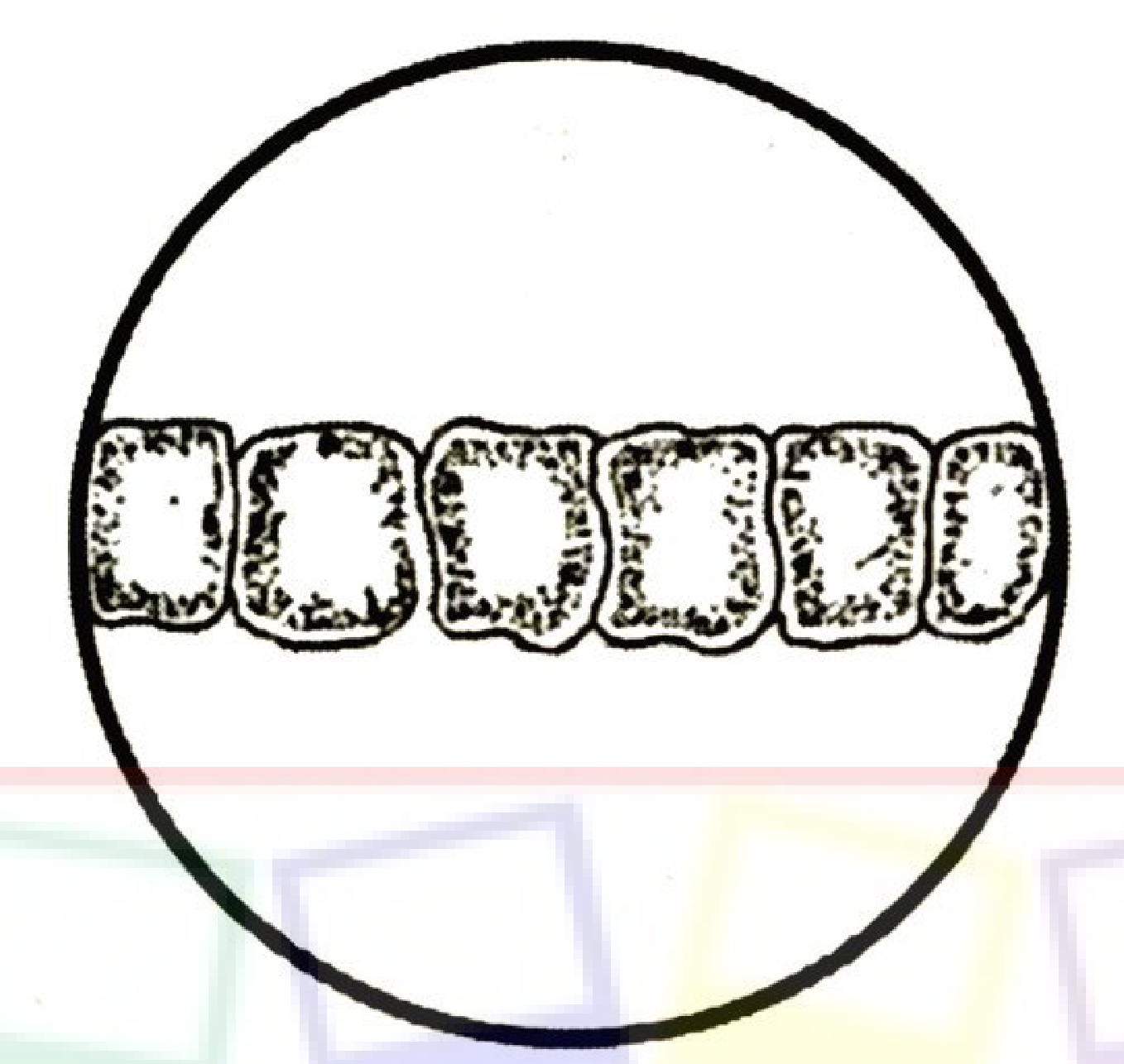
Determine the length of each cell in micrometres. (1 mm = 1000 μm) (2 marks)
14. Name the cell organelle responsible for each of the following activities: (a) protein synthesis; (1 mark) (b) transport of lipids. (1 mark)
15. Name two organisms that belong to the Kingdom Protoctista. (2 marks)
16. (a) Explain why only the fine adjustment knob should be used when focusing a specimen using the high power objective lens of the light microscope. (2 marks)
(b) An animal cell was viewed under a light microscope using an objective lens of ×75 and an eyepiece lens of ×10. Determine the total magnification of the image. (2 marks)
17. A goat and a sheep are both herbivores. Explain why the two can comfortably exist in the same ecosystem. (2 marks)
18. The diagram below shows the bones of the human arm.
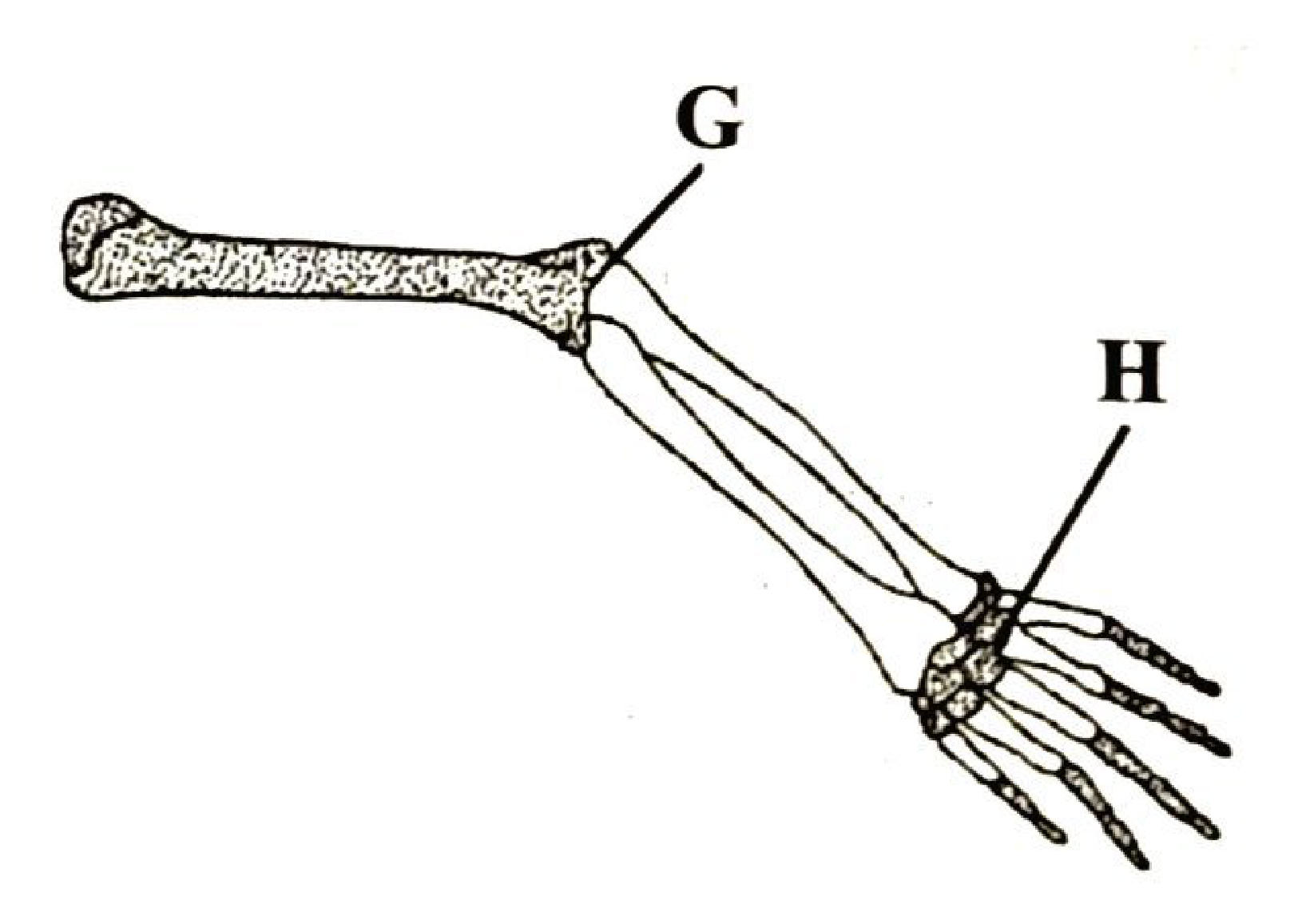
(a) Name the type of joint formed in the region labelled: (i) G; (1 mark) (ii) H. (1 mark)
(b) Explain why the bones of the cranium are fused. (1 mark)
19. 60 white and 60 black mice were released in an area inhabited by jackals. After six weeks, it was established that 24 black and 8 white mice had remained.
(a) Account for the above observation. (3 marks)
(b) Name the evolution theory that supports this observation. (1 mark)
20. A small amount of a substance K was applied on one side of bean coleoptiles. After 36 hours, the coleoptiles curved away from the side where the substance was applied.
(a) Suggest the likely identity of substance K. (1 mark)
(b) Explain how the substance may have caused the coleoptiles to curve. (3 marks)
21. Explain the role of antidiuretic hormone when the human blood water level is below normal. (3 marks)
22. Equal amounts of crushed Irish potato were placed in equal volumes of hydrogen peroxide solution at various pH values. A gas, L, was produced, its volume measured and recorded as shown in the table below.
| pH | 4.2 | 7.0 | 9.2 |
|---|---|---|---|
| Volume of gas L (cm³) | 2.9 | 5.9 | 7.9 |
(a) Identify gas L. (1 mark)
(b) Account for the difference in the volume of gas L produced at pH values 4.2 and 9.2. (3 marks)
23. (a) Name the causative agent of trichomoniasis. (1 mark)
(b) State the role of hair-like structures in each of the following: (i) fallopian tube; (ii) nasal lining. (2 marks)
(c) Name the agent of pollination in a maize plant. (1 mark)
24. Below is a graphical representation of the population of animals in a certain ecosystem over a period of time.
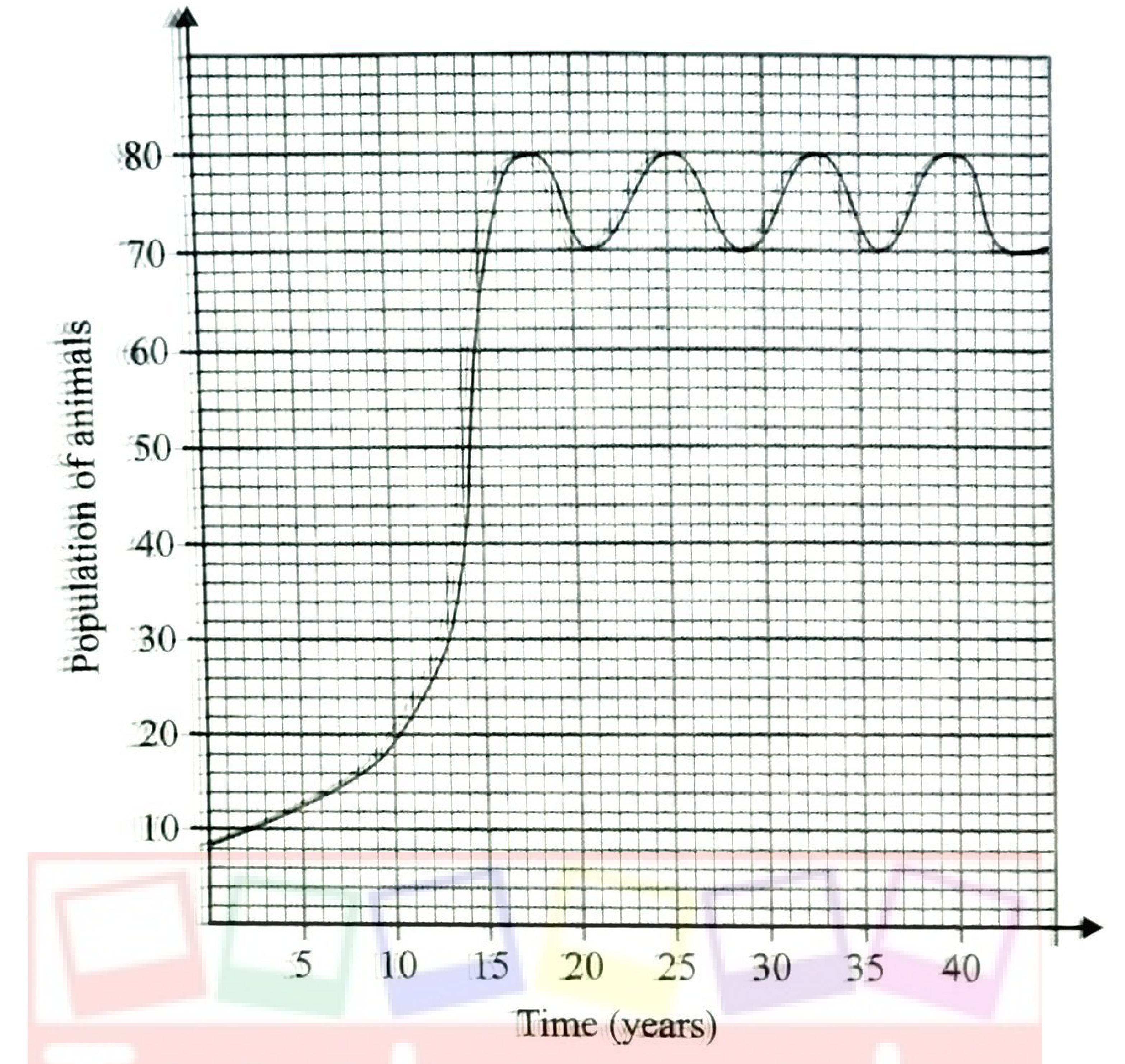
(a) Determine the carrying capacity of the ecosystem. (1 mark)
(b) Account for the change in population for the first 15 years. (3 marks)
25. The photograph below shows a plant obtained from a certain habitat.
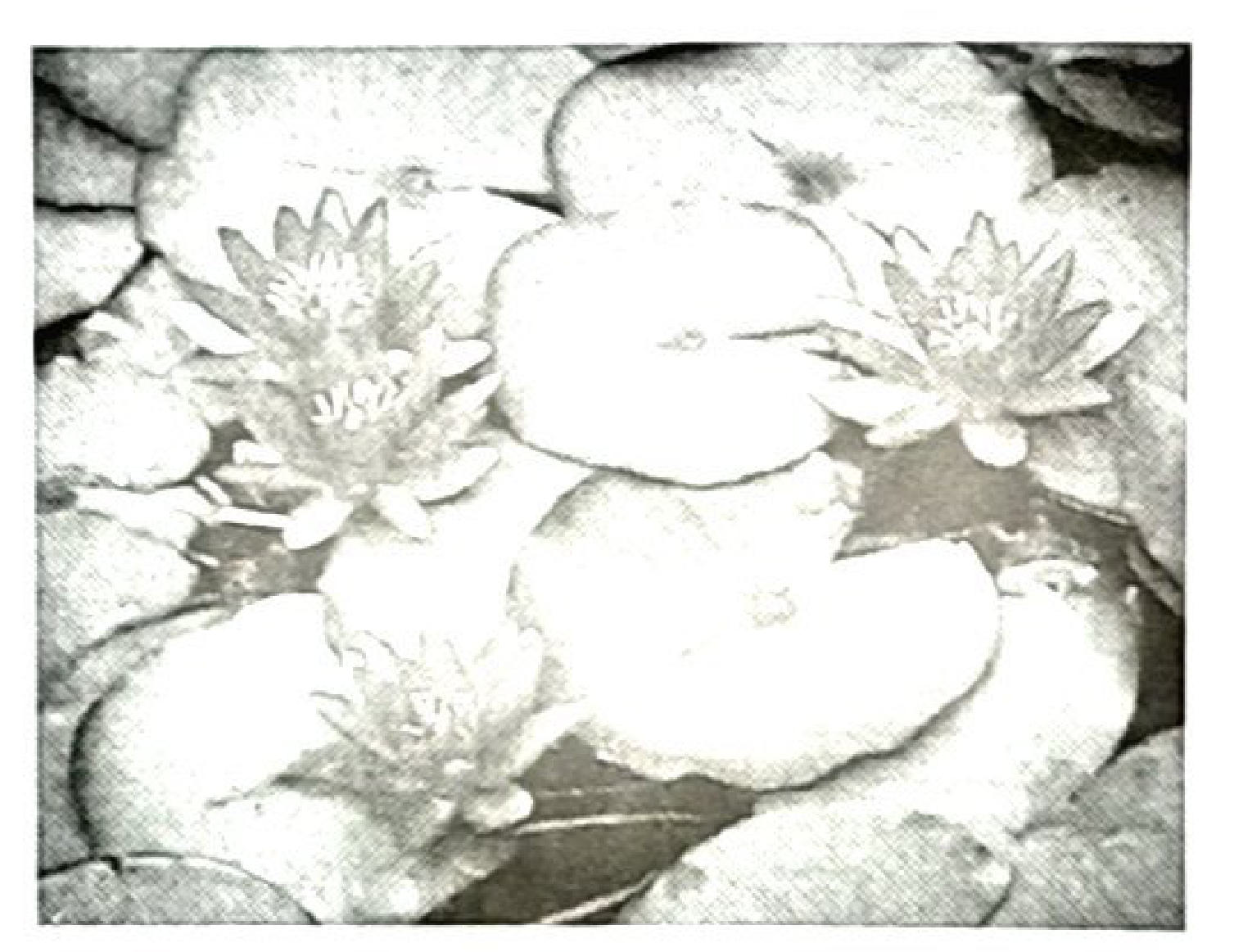
(a) Suggest the likely habitat for the plant. (1 mark)
(b) Explain your answer in 25(a). (3 marks)