232/2 · PHYSICS (Theory) · Paper 2 · Nov. 2023 · 2 hours
Instructions: This paper consists of two sections, A and B. Answer all the questions in sections A and B. All working must be clearly shown. Non-programmable scientific calculators may be used.
Section A (25 marks)
1. State with a reason the effect of reducing the heater current on the x-rays produced in an x-ray tube. (1 mark)
2. State one property of a magnet. (1 mark)
3. State the importance of using the correct colour codes in the domestic wiring system. (1 mark)
4. Using the energy band theory, explain the difference between conductors and semi-conductors. (3 marks)
5. State one quantity that must be kept constant for Ohm's law to hold. (1 mark)
6. Figure 1 shows an object placed near the eye of a long-sighted person.
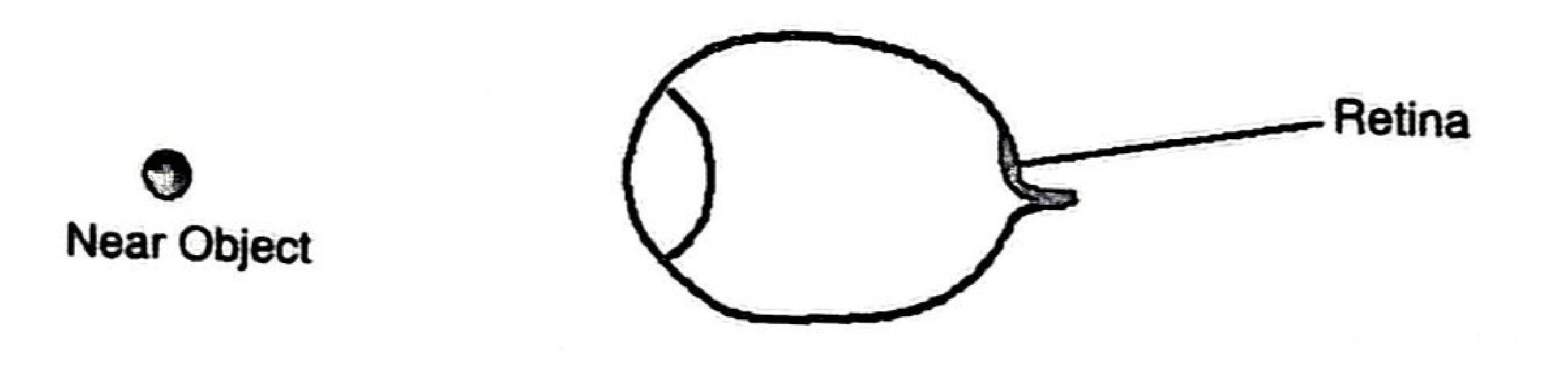
Complete the diagram to show where the image is formed. (2 marks)
7. Figure 2 shows a student using a small plane mirror to view her image.
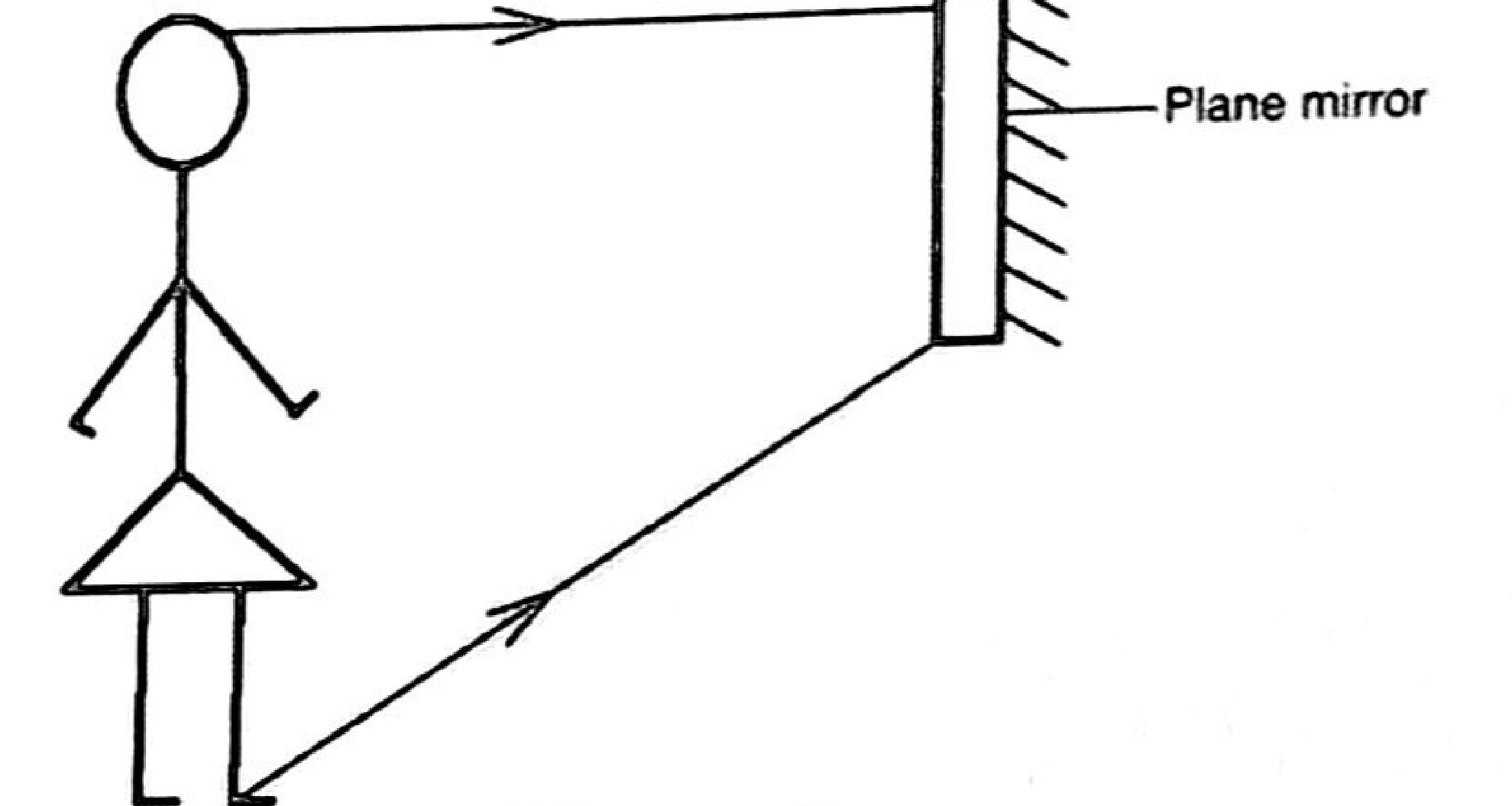
Explain why the student is able to see her face but not her legs in the mirror. (2 marks)
8. Figure 3 shows a coil made from tungsten being used to heat some water in a beaker at a constant voltage.
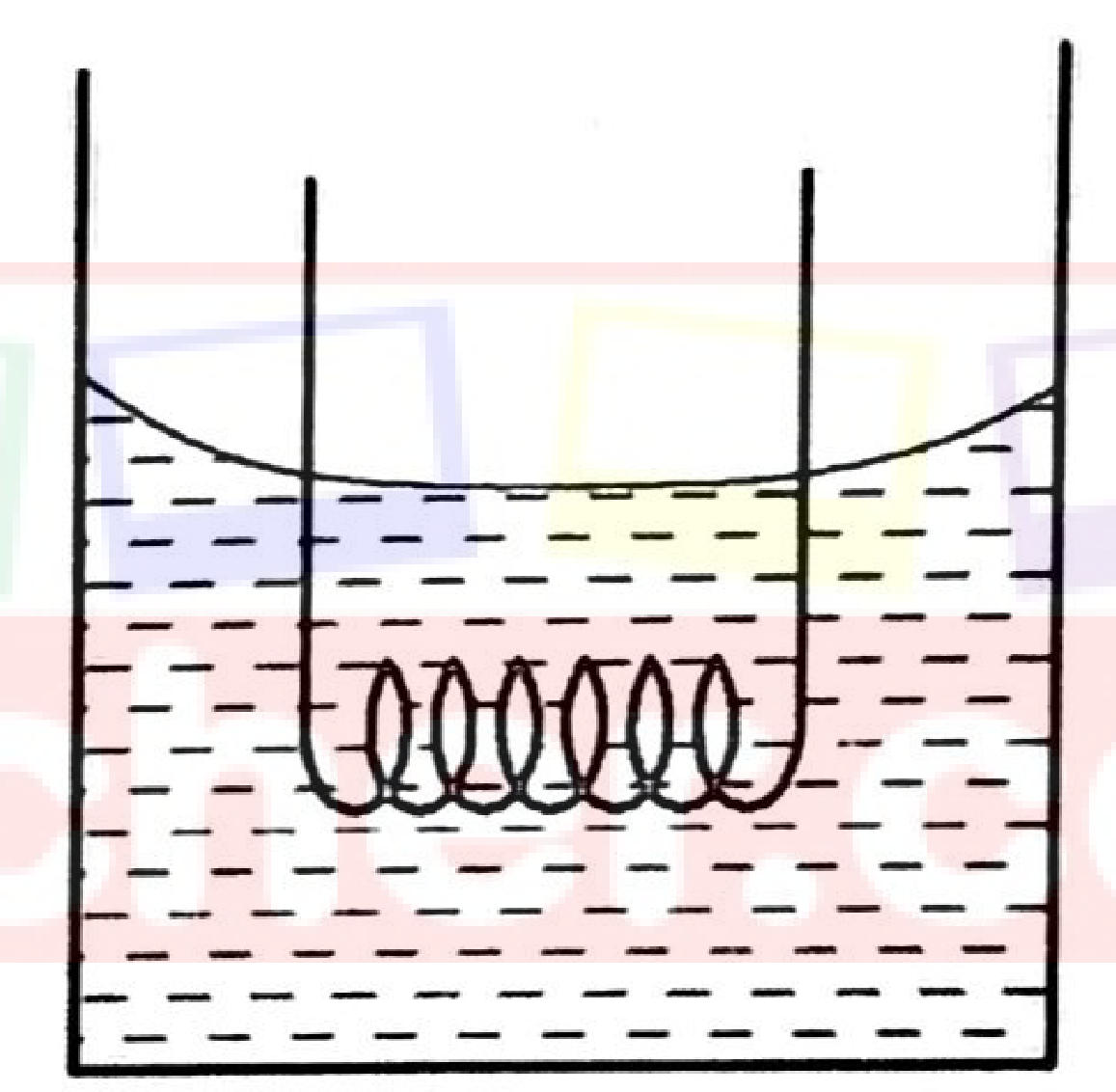
State two ways in which the coil can be improved so that the water boils in a shorter time. (2 marks)
9. Describe how a cathode ray oscilloscope may be used to measure the voltage of an alternating signal. (3 marks)
10. Explain why it is not advisable to leave a lead-acid accumulator in the discharged condition for a long time. (2 marks)
11. State two properties that distinguish electromagnetic waves from mechanical waves. (2 marks)
12. Thorium decayed to produce gamma radiation as shown in the equation below:
State the values of and . (2 marks)
13. A student observed a rainbow when it was raining and the sun was shining. Explain how dispersion of white light by rain drops leads to the formation of the rainbow. (2 marks)
14. State the reason why sound waves get refracted away from the ground on a hot day. (1 mark)
Section B (55 marks)
15. (a) Figure 4 shows a gold-leaf electroscope.
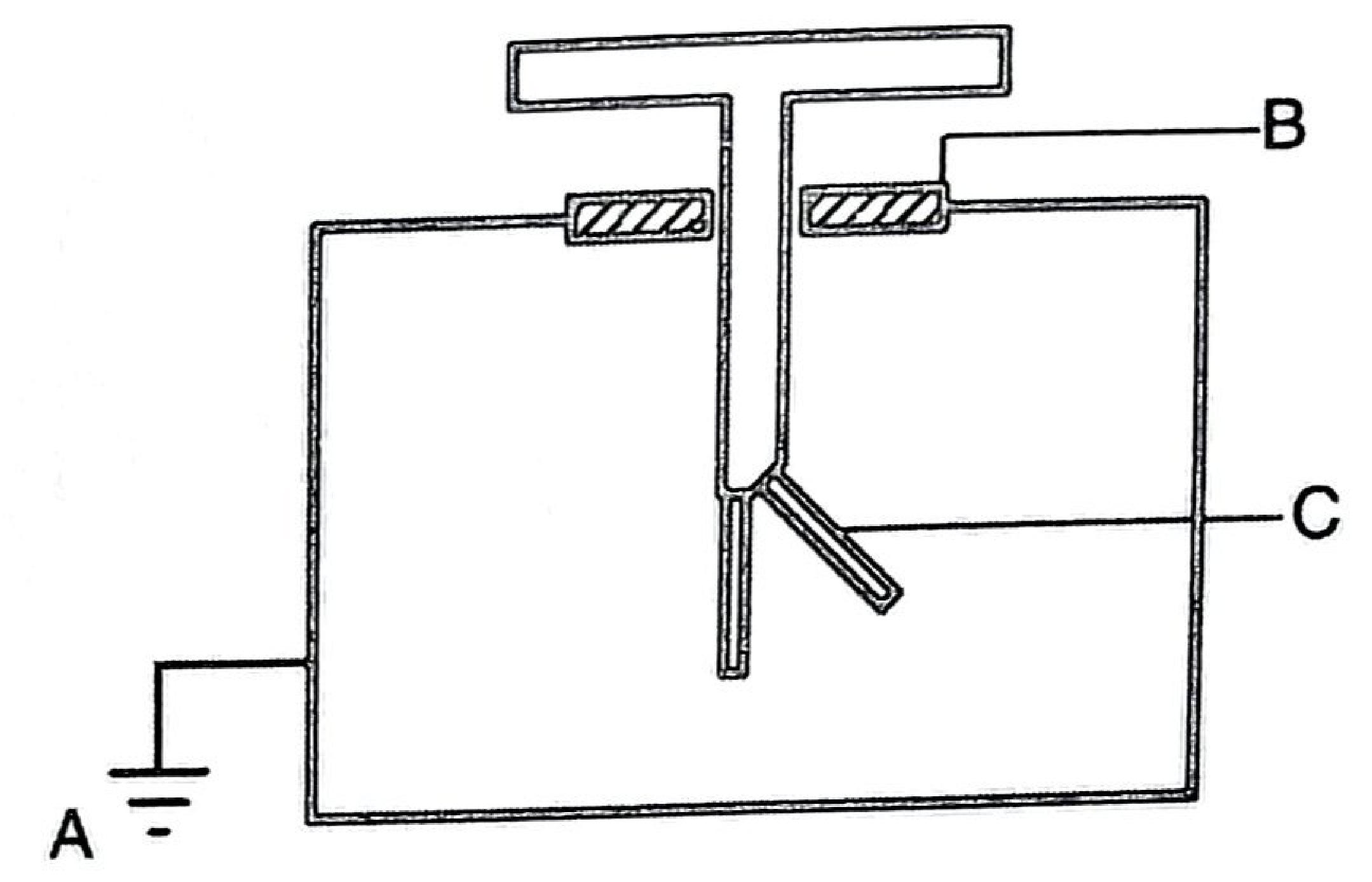
(i) Identify the part labelled A. (1 mark)
(ii) State the function of the parts labelled: (I) B; (1 mark) (II) C. (1 mark)
(b) A highly negatively charged rod is slowly brought close to a lightly positively charged gold-leaf electroscope.
(i) State what is observed on the gold leaf. (1 mark)
(ii) Explain the observation made in b(i). (2 marks)
(c) Figure 5 shows a thin wire connected to a highly positively charged rod and placed close to a candle flame.
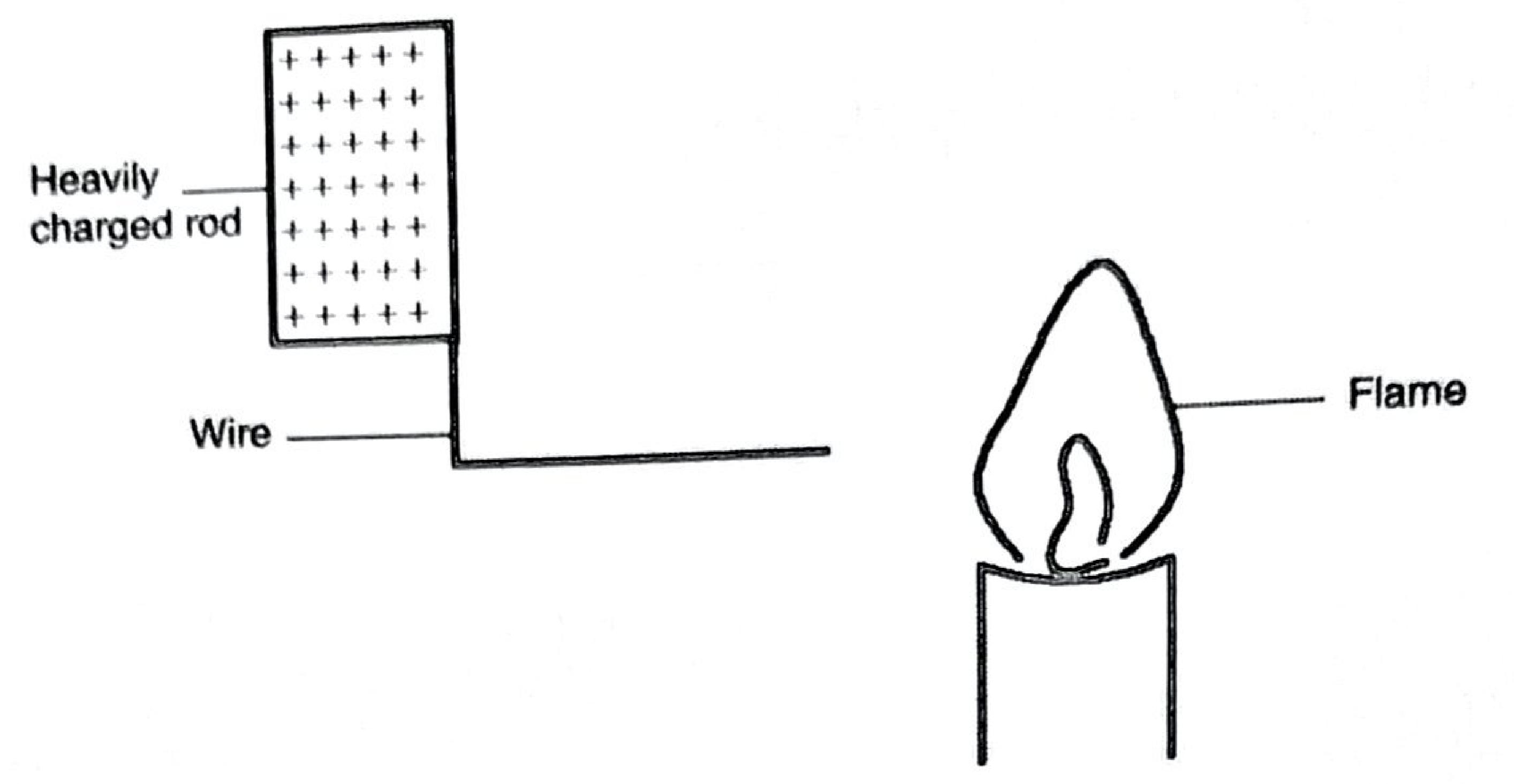
(i) State what is observed on the flame when the wire is brought closer. (1 mark)
(ii) Explain the reason for the observation in c(i). (1 mark)
(d) Figure 6 shows an arrangement of three capacitors in a circuit.
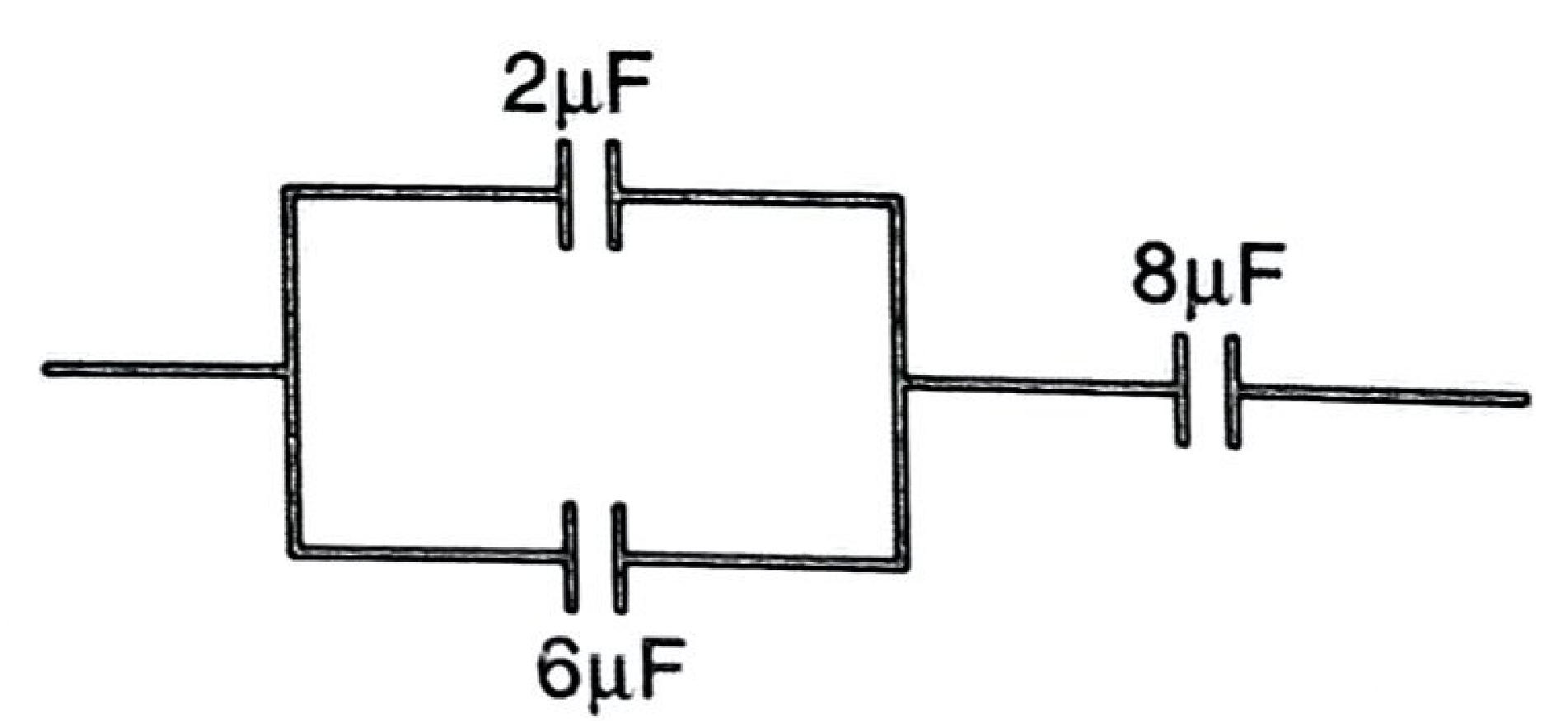
Determine the effective capacitance of the arrangement. (3 marks)
16. (a) State Fleming's left hand rule. (1 mark)
(b) Figure 7 shows an electric motor with a coil ABCD in the magnetic field.
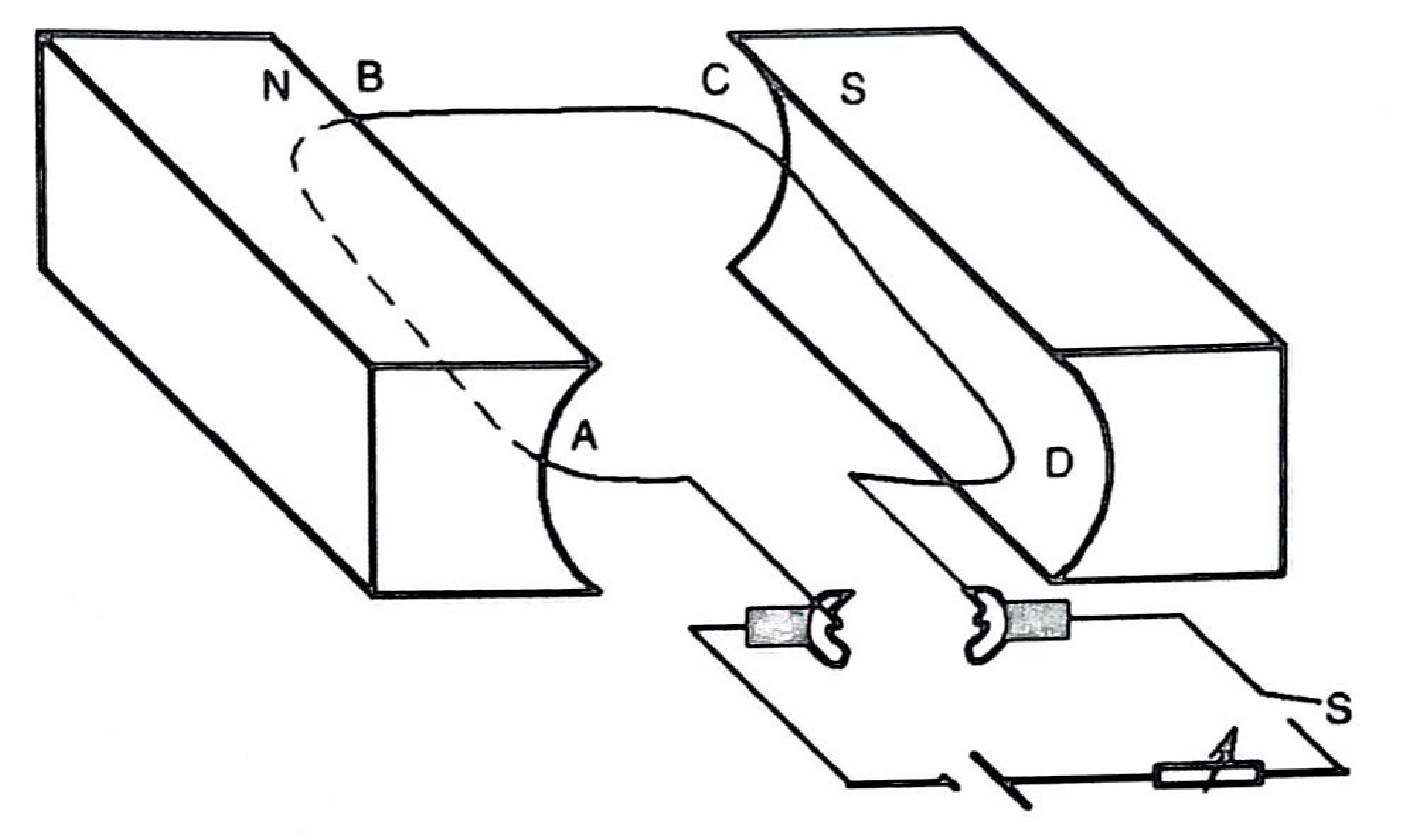
(i) Indicate with an arrow on the coil ABCD, the direction of the current I when switch S is closed. (1 mark)
(ii) State the direction in which the coil rotates when the switch is closed. (1 mark)
(iii) Explain what makes the coil rotate. (3 marks)
(iv) State three ways in which the power of this motor can be increased. (3 marks)
(v) State the purpose of the rheostat in the setup. (1 mark)
17. (a) Figure 8 shows a setup that may be used to investigate the photoelectric effect. In the setup, a UV source is placed close to the window.
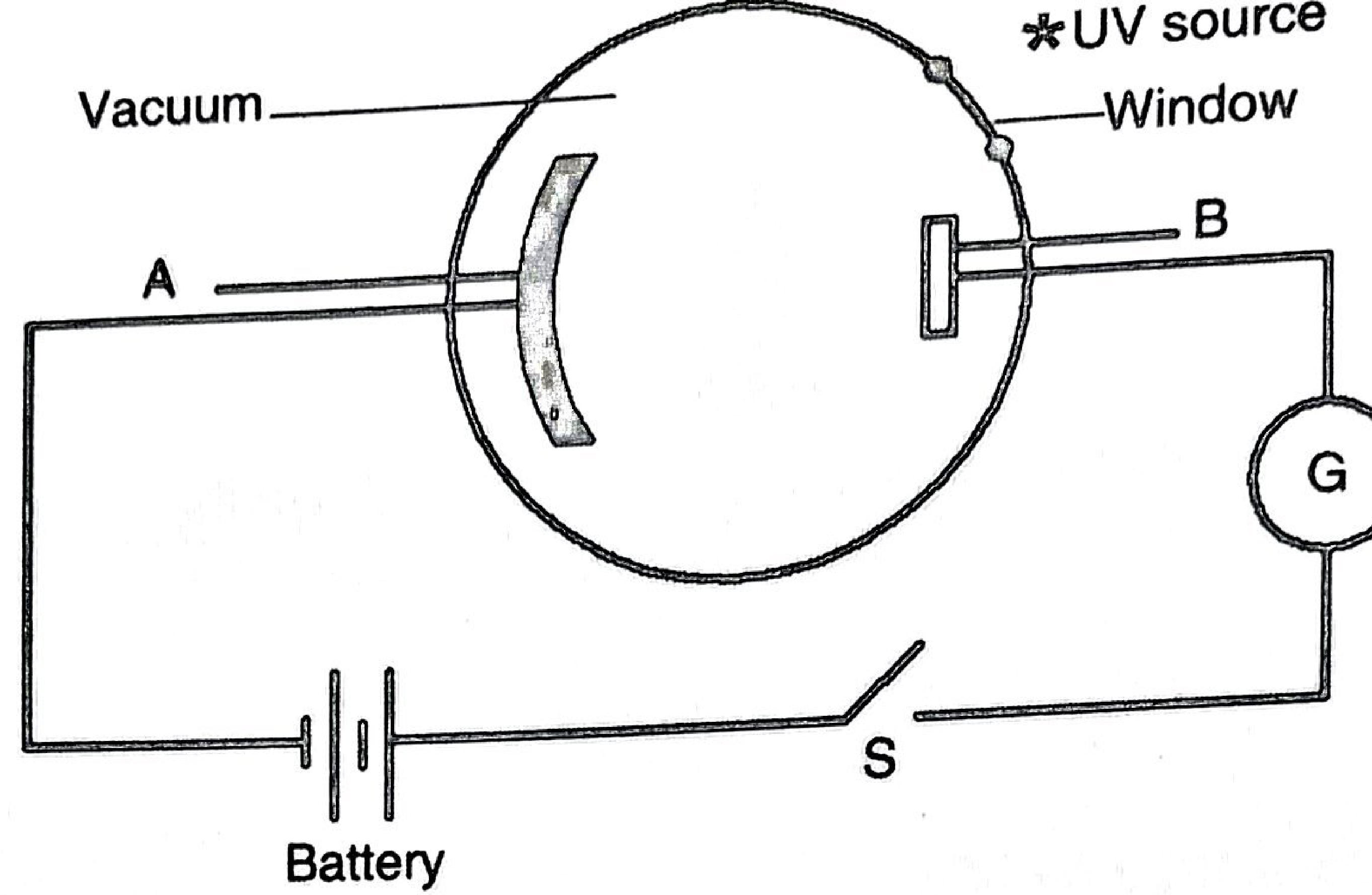
(i) Explain what is observed on the galvanometer when the window is opened and the switch is closed. (3 marks)
(ii) Explain why parts A and B are placed in a vacuum. (2 marks)
(b) A photon of red light has a wavelength of m [sic — read as m]. Determine the energy it contains. (Planck's constant J s; speed of light m s⁻¹) (3 marks)
(c) A metal surface has a work function of 4.5 eV. ( J s; electronic charge C.) Determine the:
(i) work function of the metal in joules (J); (2 marks)
(ii) maximum wavelength of a radiation that will cause electrons to be emitted from the surface. (3 marks)
18. (a) Figure 9 shows the image produced by a concave mirror of focal length 20 cm.
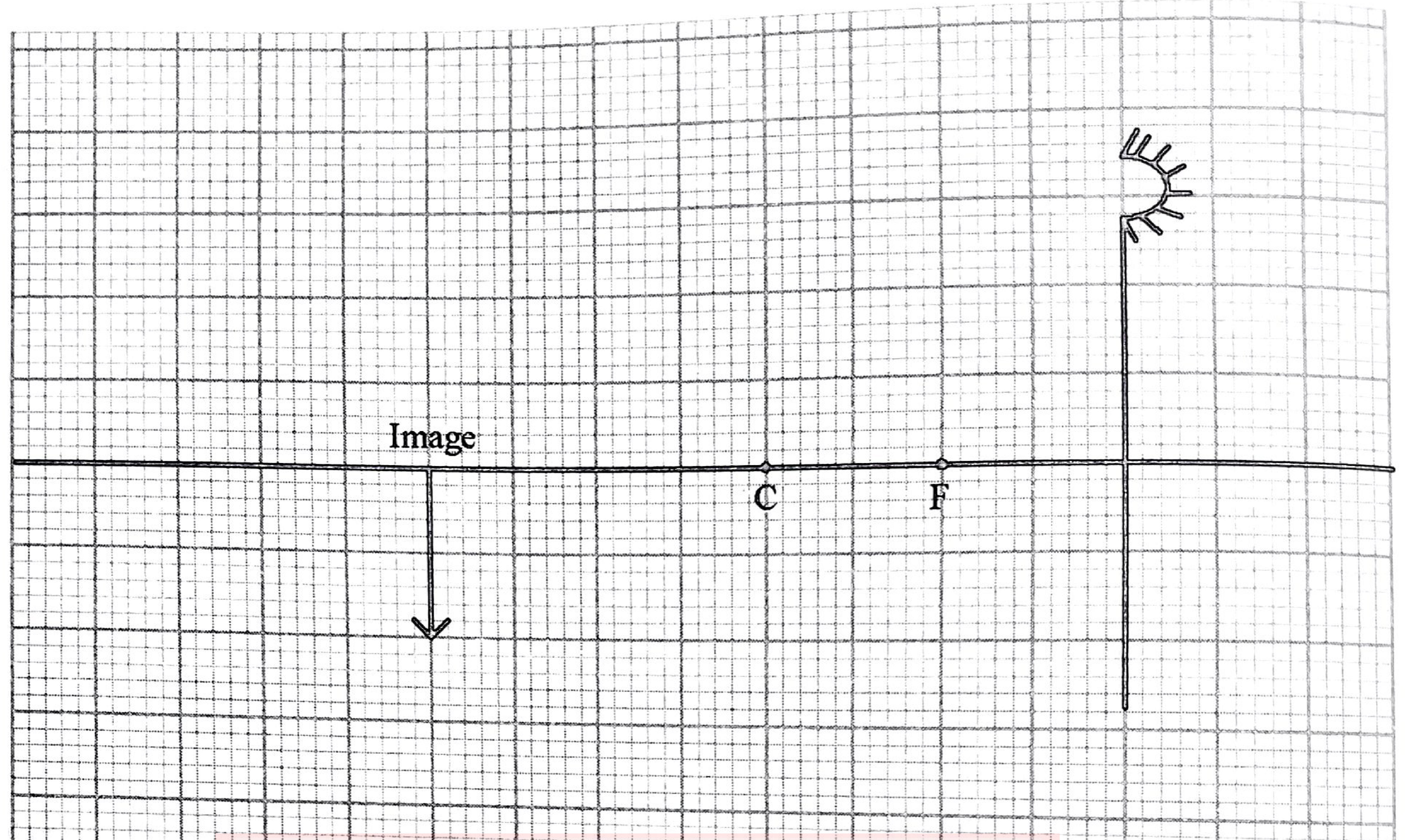
(i) On the same diagram draw rays to show the position of the object. (3 marks)
(ii) Given that the diagram is drawn to scale, determine the: (I) distance of the object from the mirror; (1 mark) (II) magnification. (3 marks)
(b) Figure 10 shows a ray of light incident at the pole of a convex mirror.
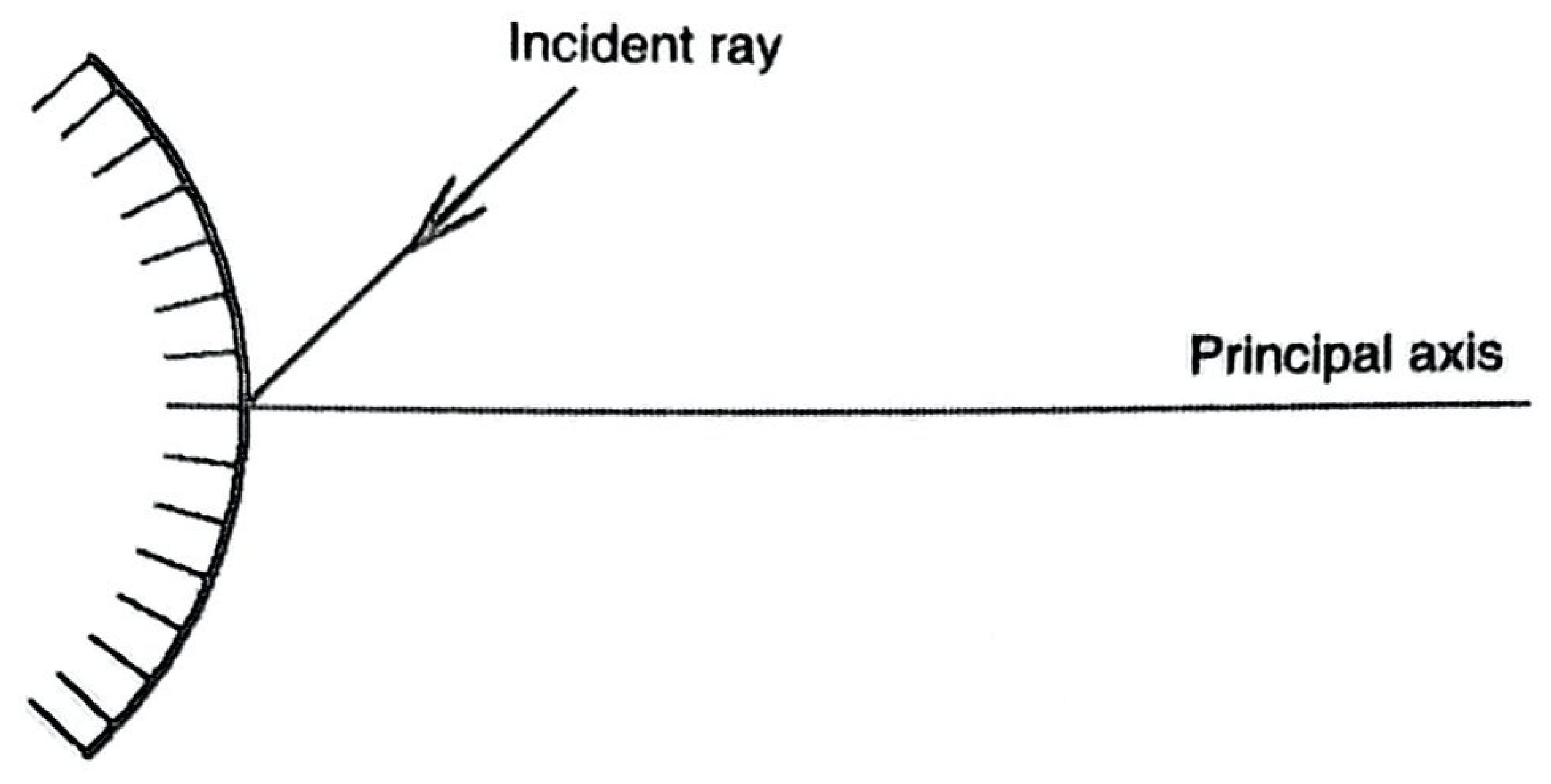
(i) Complete the diagram to show how the ray may be used to locate the image formed by the mirror. (2 marks)
(ii) State any two characteristics of the image formed. (2 marks)
19. (a) A cliff obstructs an observer from seeing an approaching car. Explain how the sound from the car reaches the observer before the car emerges. (2 marks)
(b) Figure 11 shows a displacement–time graph for a certain wave motion.
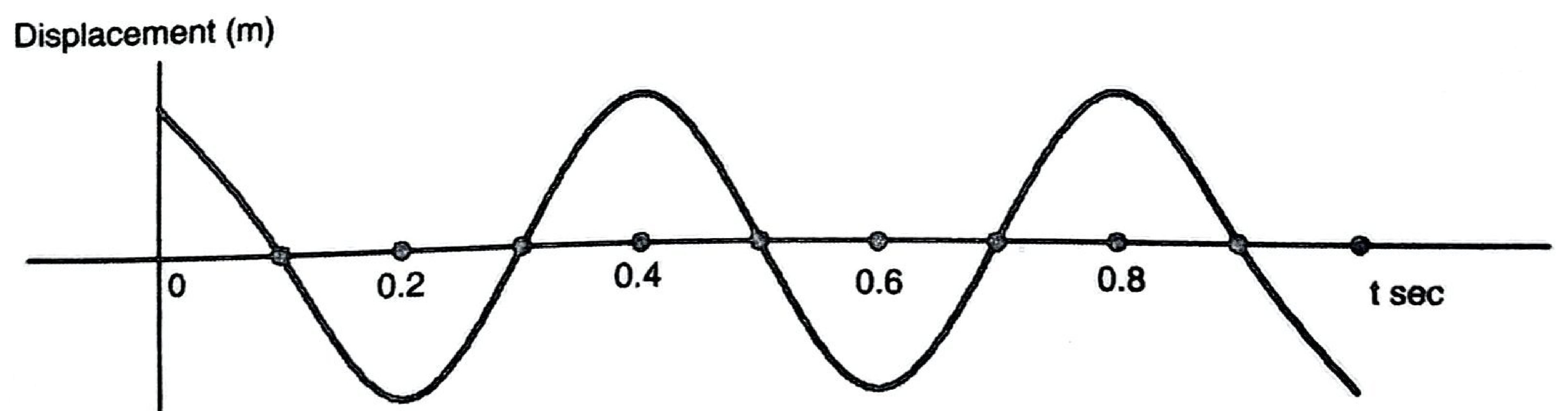
(i) Determine the: (I) period T; (1 mark) (II) frequency f. (2 marks)
(ii) On the same axes draw a wave whose frequency is twice the one obtained in part (II). (2 marks)
(c) (i) State the meaning of the term "refraction". (1 mark)
(ii) Figure 12 shows a rectangular glass block dipped in a ripple tank in which plane water waves are generated.
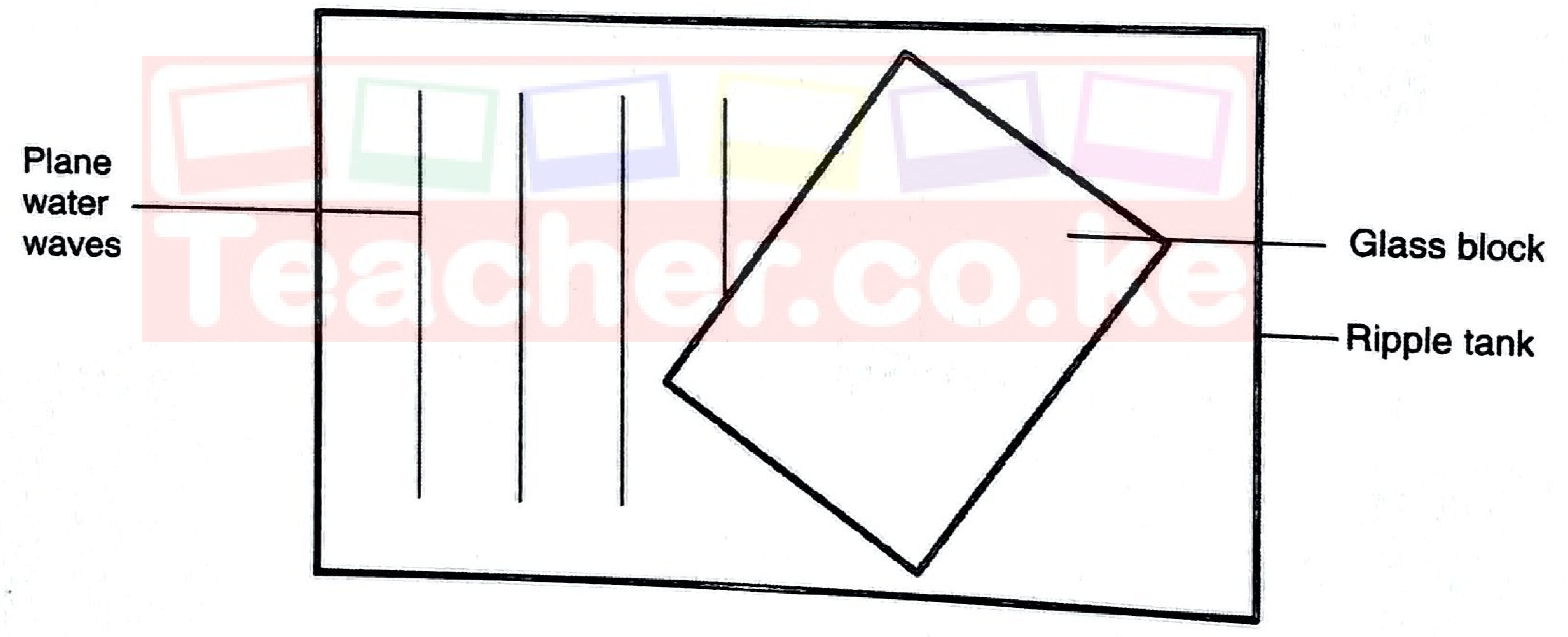
Complete the diagram to show how the water waves move in the region that has the glass block. (2 marks)