312/2 · GEOGRAPHY · Paper 2 · Nov. 2023 · 2¾ hours
Instructions: This paper consists of two sections, A and B. Answer all the questions in section A. In section B answer question 6 and any other two questions.
Section A (25 marks)
1. (a) Name two minerals that occur as weathering products. (2 marks)
(b) State three uses of soda ash. (3 marks)
2. (a) Name the hydroelectric power projects located on each of the following rivers in Africa: (i) River Zambezi; (1 mark) (ii) River Volta. (1 mark)
(b) State three factors that have hindered the development of solar energy in Kenya. (3 marks)
3. Figure 1 is a map that shows wheat-growing areas of Canada. Use it to answer question 3(a).
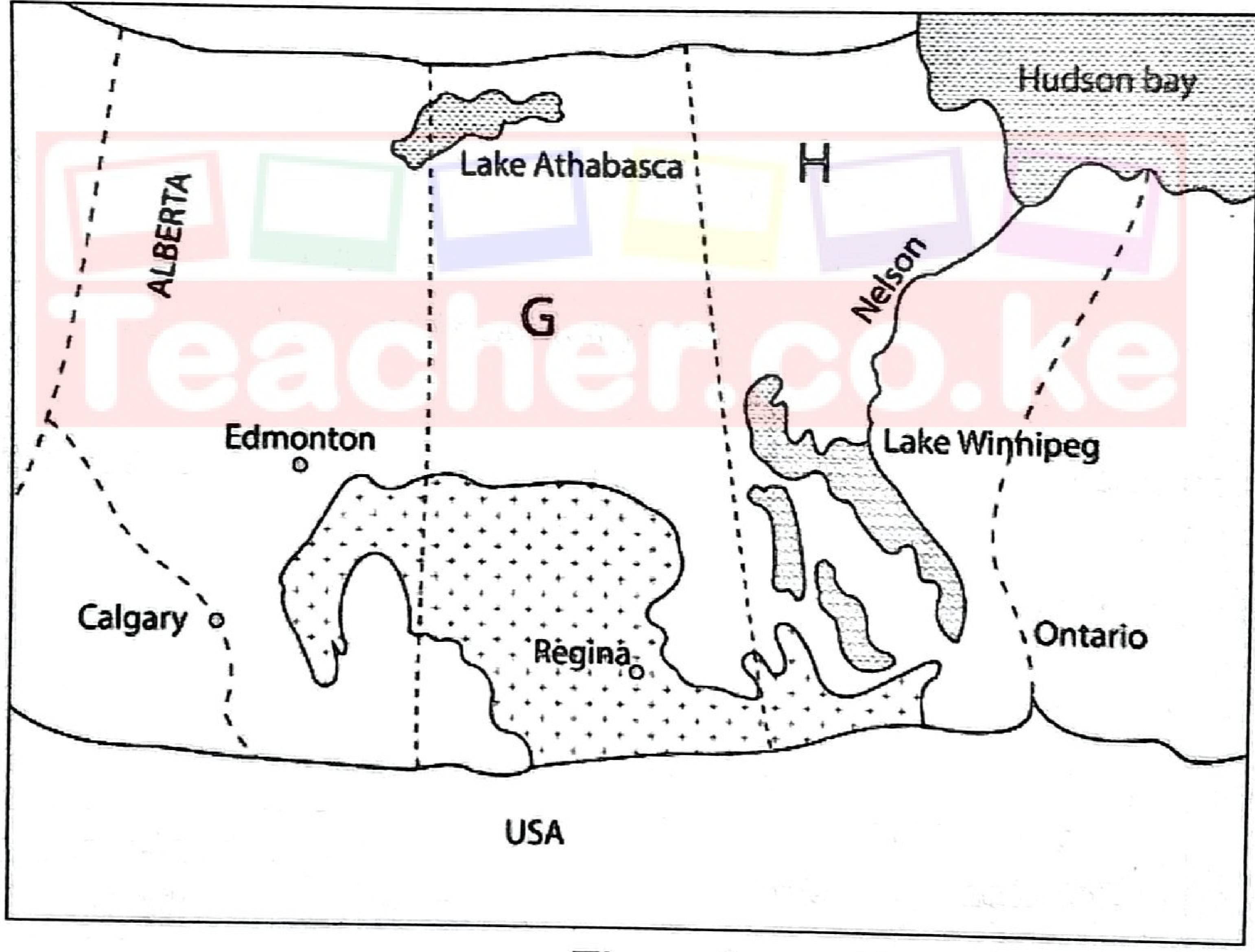
(a) Name the provinces marked G and H. (2 marks)
(b) State three reasons for the increase in the price of maize in Kenya. (3 marks)
4. (a) Explain the term visible trade. (2 marks)
(b) State three economic benefits of the Southern African Development Community (SADC) to its member states. (3 marks)
5. (a) Apart from pollution, name two other environmental hazards that occur as a result of human activities. (2 marks)
(b) State three effects of air pollution on the physical environment. (3 marks)
Section B (75 marks)
Answer question 6 and any other two questions from this section.
6. Study the following photograph and use it to answer question 6(a).
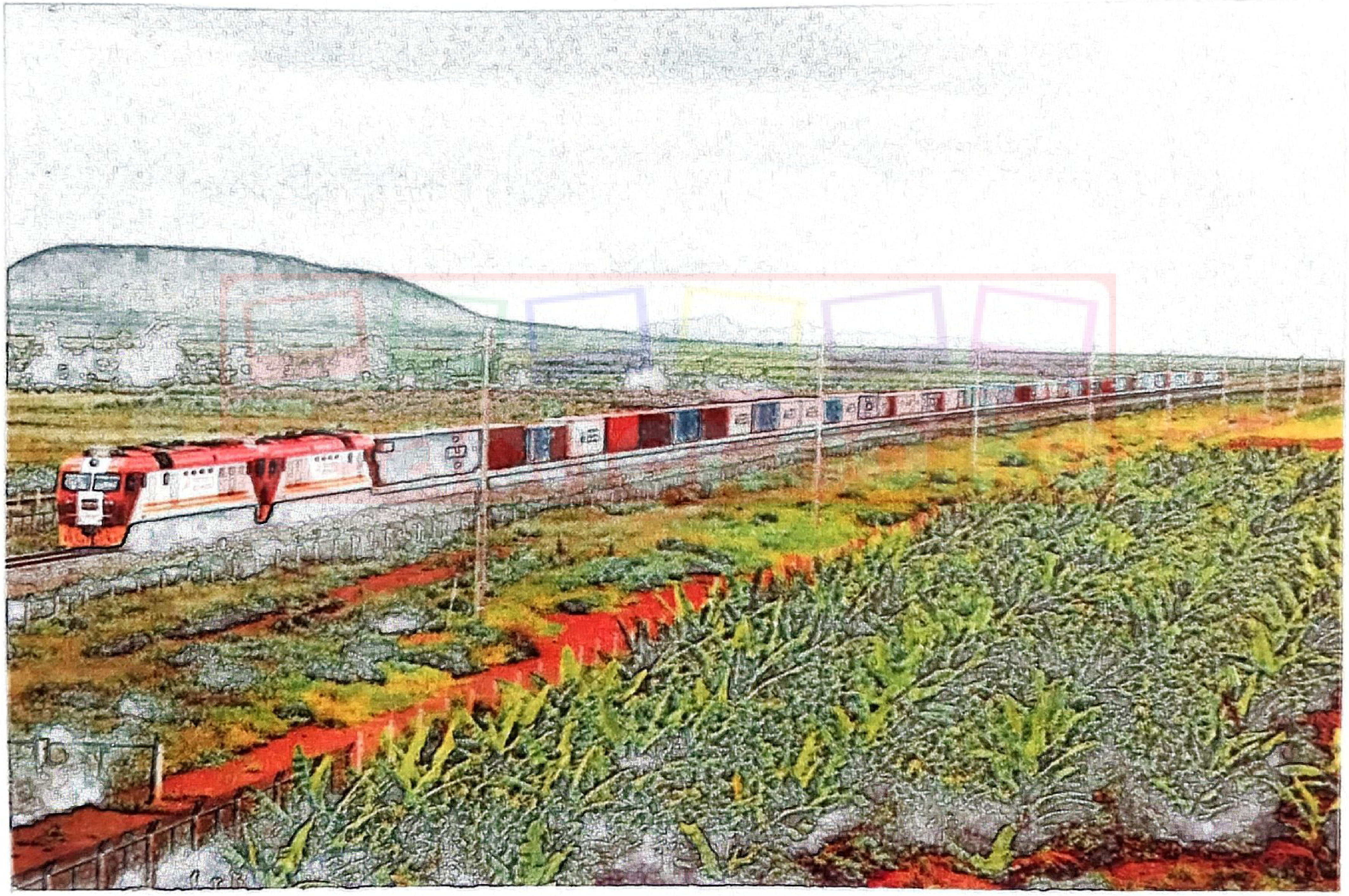
(a) (i) What evidence in the photograph shows that it is a ground general-view type of photograph? (2 marks)
(ii) Draw a rectangle 14 cm by 8 cm to represent the area of the photograph. On it, sketch and label the main features shown in the photograph. (6 marks)
(b) Explain four measures that African countries would undertake to solve the challenges associated with railway transport. (8 marks)
(c) State five reasons why there has been limited use of river transport in Africa. (5 marks)
(d) Give four ways in which the use of mobile phones has contributed to the economy of Kenya. (4 marks)
7. (a) Give four physical conditions that favour sugarcane growing in the Lake Victoria basin. (4 marks)
(b) (i) Describe the stages involved in the processing of sugarcane at the factory. (6 marks) (ii) Apart from sugar, give three other products obtained from sugarcane. (3 marks)
(c) Explain three causes of the decline of sugarcane farming in Kenya. (6 marks)
(d) Explain three ways in which the Kenyan government is promoting the sugar industry. (6 marks)
8. (a) (i) Define horticulture. (2 marks) (ii) Outline five characteristics of horticultural farming in Kenya. (5 marks)
(b) (i) Give four physical factors that favour horticultural farming in Kenya. (4 marks) (ii) Explain three challenges that horticultural farmers experience in marketing their produce. (6 marks)
(c) You intend to carry out a field study in a nearby horticultural farm.
(i) Apart from flowers, identify the other two types of crops you are likely to find in the farm. (2 marks)
(ii) Give two sources of information that you would use for the field study. (2 marks)
(iii) State four factors that have contributed to fast growth of the flower farming sub-sector in Kenya. (4 marks)
9. (a) (i) Differentiate between pelagic and demersal fish. (2 marks) (ii) Describe the drift method of fishing. (6 marks)
(b) Explain four reasons why there is widespread fresh water fishing in East Africa. (8 marks)
(c) (i) Explain how each of the following factors influences fishing in Kenya and Japan: market; (2 marks) technology. (2 marks)
(ii) State the significance of fishing to the economy of Kenya. (5 marks)
10. (a) (i) Name two types of settlement patterns found in rural areas. (2 marks) (ii) State five factors that have contributed to the emergence of slums in urban centres. (5 marks)
(b) Explain four functions of Eldoret town. (8 marks)
(c) State four factors that led to the growth of New York City in America. (4 marks)
(d) Explain three measures that have been undertaken to reduce motor vehicle traffic congestion in Nairobi city. (6 marks)