443/2 · AGRICULTURE (Theory) · Paper 2 · Nov. 2023 · 2 hours
Instructions: This paper consists of three sections, A, B and C. Answer all the questions in sections A and B, and any two questions in section C.
Section A (30 marks)
1. Name four types of feed given to pigs from birth to maturity. (2 marks)
2. State two characteristics of each of the following goat breeds: (a) Saanen [printed "Gamaen"]; (1 mark) (b) Toggenburg. (1 mark)
3. State four behavioural characteristics that may indicate sickness in livestock. (2 marks)
4. Give four reasons why livestock breeding is carried out. (2 marks)
5. State four importance of flushing in ewes. (2 marks)
6. State four predisposing factors of livestock diseases. (2 marks)
7. State four advantages of castrating male piglets. (2 marks)
8. Give four control measures to prevent egg-eating in a deep litter poultry rearing system. (2 marks)
9. Give four reasons for carrying out maintenance practices on a chaff cutter. (2 marks)
10. State four signs of livestock sickness observed on dung. (2 marks)
11. State four uses of electric power in a dairy unit. (2 marks)
12. Name two sheep breeds that are reared for: (a) mutton; (1 mark) (b) both mutton and wool. (1 mark)
13. State four advantages of animal power over tractor power. (2 marks)
14. Name the farm tool used for each of the following: (a) cutting curves in wood; (½ mark) (b) smoothing a curved wood surface; (½ mark) (c) bloodless castration; (½ mark) (d) cutting and splicing wires. (½ mark)
15. State four factors considered when selecting construction materials. (2 marks)
Section B (20 marks)
16. The following diagram shows a livestock rearing practice.
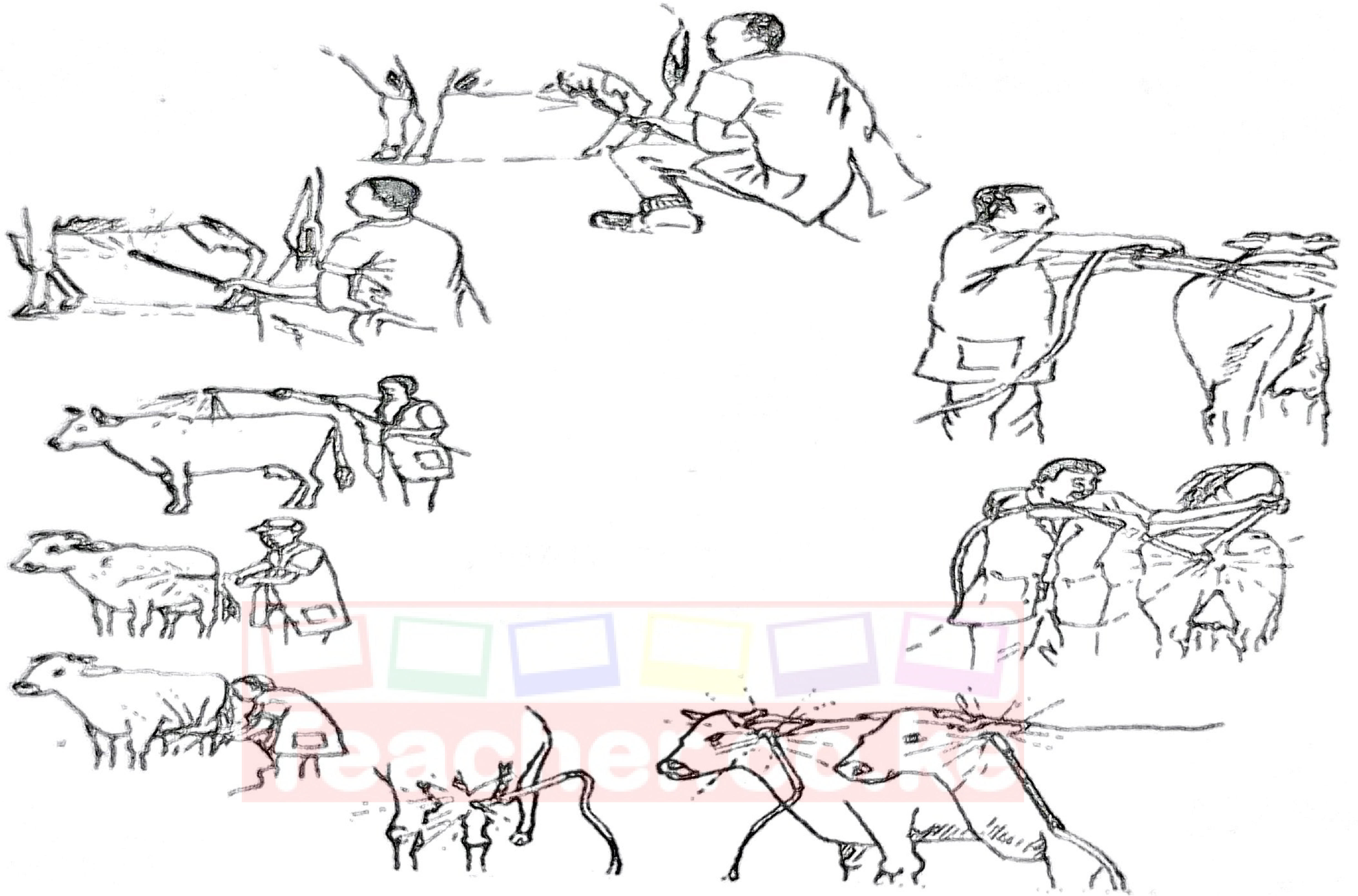
(a) Give a reason why the practice is carried out. (1 mark)
(b) Using letters X and Y, mark on the diagram the animal part that is targeted: (i) first (X); (1 mark) (ii) last (Y). (1 mark)
(c) Name the farm structure in which the practice should be carried out. (1 mark)
(d) Name the farm equipment the farmer used to carry out the practice. (1 mark)
17. The following picture shows a tractor-drawn implement.
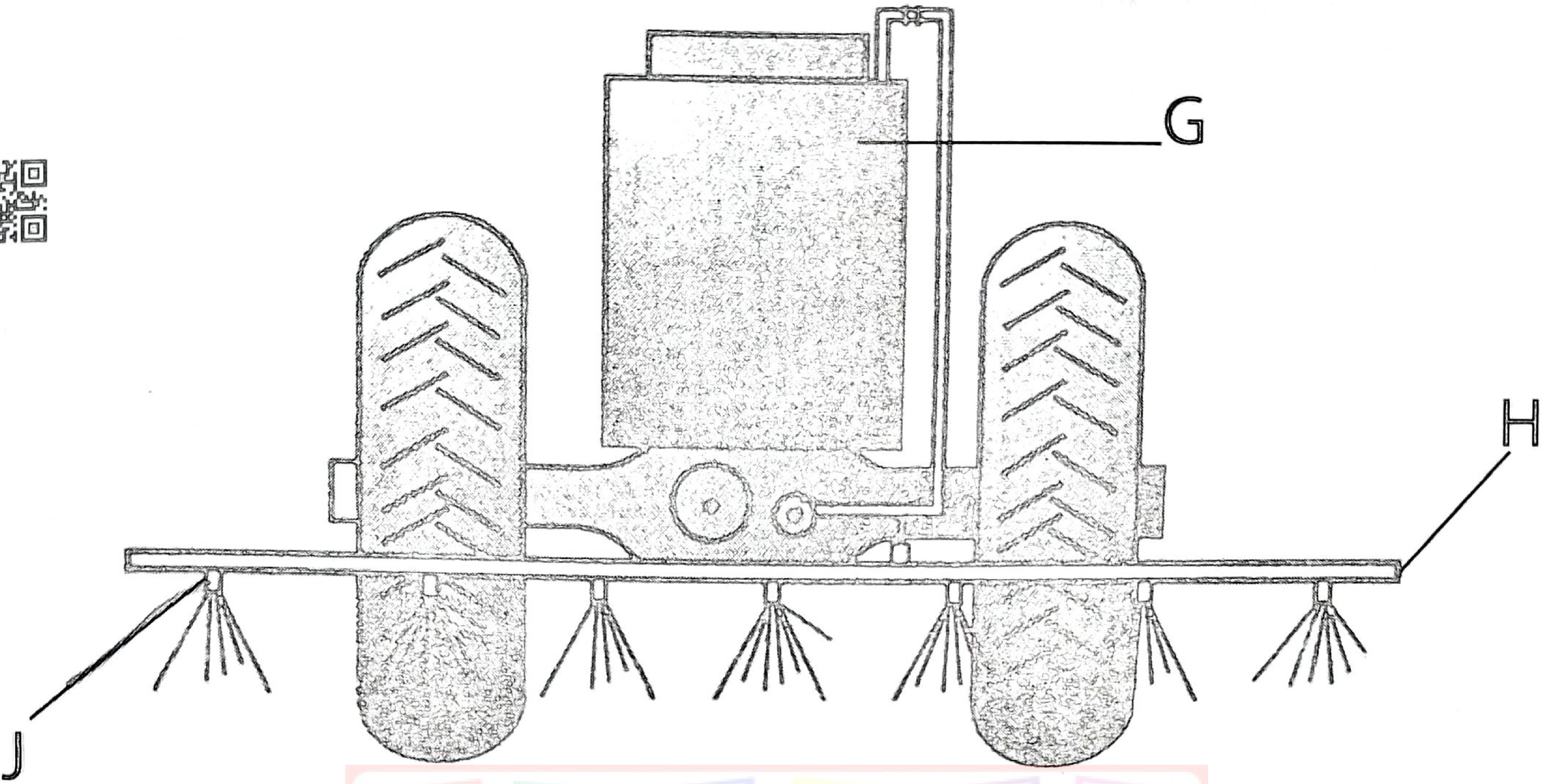
(a) Identify the implement. (1 mark)
(b) Name the part labelled: (i) G; (1 mark) (ii) H; (1 mark) (iii) J. (1 mark)
(c) State one maintenance practice for the part labelled J. (1 mark)
18. A farmer observed the following symptoms on a cow:
- distended left side of the abdomen;
- difficulty in breathing;
- profuse salivation;
- cow lies down and is unable to rise up.
(a) Identify the disorder the cow was suffering from. (1 mark)
(b) State two factors that may have led to the disorder. (2 marks)
(c) Give two control measures for the disorder. (2 marks)
19. The following pictures show parts of a farm structure.
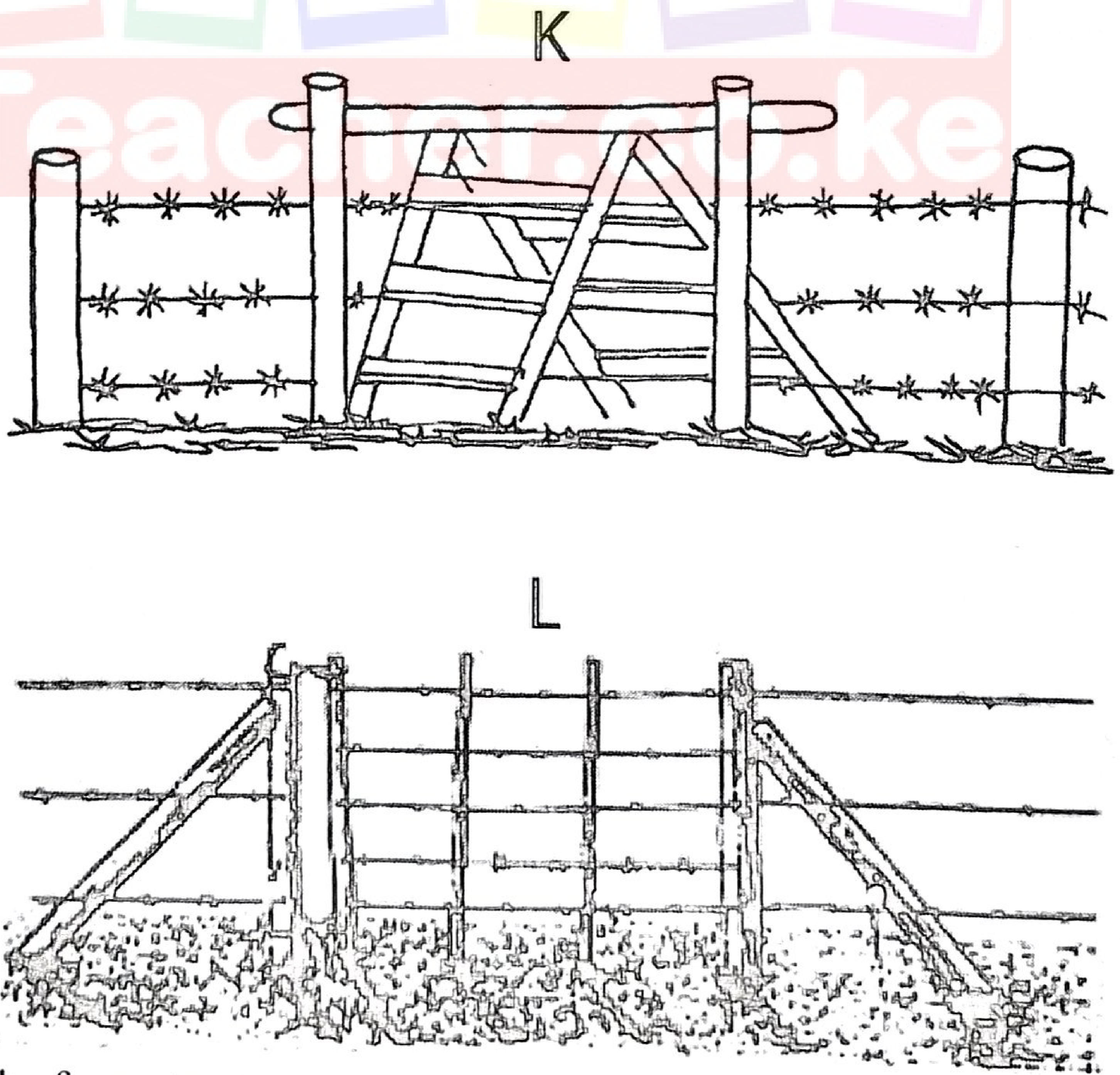
(a) Identify the farm structure. (1 mark)
(b) Name the part labelled: K; (1 mark) L. (1 mark)
(c) State one functional difference between the parts labelled K and L. (1 mark)
(d) Give one maintenance practice for the part labelled L. (1 mark)
Section C (40 marks)
Answer any two questions from this section.
20. (a) Describe roundworm (Ascaris spp.) infestation in livestock under the following sub-headings: (i) livestock infested; (2 marks) (ii) symptoms of infestation; (4 marks) (iii) control measures. (4 marks)
(b) Explain five conditions necessary for artificial incubation of eggs in poultry farming. (10 marks)
21. (a) Describe the rearing of a dairy calf under the following sub-headings: (i) feeding; (6 marks) (ii) housing. (4 marks)
(b) Describe the establishment of a barbed wire fence. (6 marks)
(c) State four disadvantages of live fences. (4 marks)
22. (a) Give five reasons why inbreeding is discouraged in pig rearing. (5 marks)
(b) A dairy animal dies on a farm and is suspected to have died of anthrax.
(i) State three observations that the farmer could have made on the carcass to suspect anthrax. (3 marks)
(ii) Describe four precautions the farmer should take when disposing of the carcass. (4 marks)
(c) Describe how the following parts of the poultry digestive system are adapted to their function using the table provided. (8 marks)
| Part | Adaptation | Function |
|---|---|---|
| (i) Beak | ||
| (ii) Crop | ||
| (iii) Gizzard | ||
| (iv) Caecum |