443/1 · AGRICULTURE (Theory) · Paper 1 · Nov. 2023 · 2 hours
Instructions: This paper consists of three sections, A, B and C. Answer all the questions in sections A and B, and any two questions in section C. Non-programmable silent electronic calculators may be used.
Section A (30 marks)
1. State four roles of agroforestry trees in soil and water conservation. (2 marks)
2. State four factors that determine spacing in crop production. (2 marks)
3. Give four reasons why organic farming is important. (2 marks)
4. State four advantages of applying nitrogenous fertilisers in splits. (2 marks)
5. State four factors which limit a farmer's access to agricultural credit. (2 marks)
6. Name four sources of surface water. (2 marks)
7. Give four reasons why land consolidation should be undertaken in densely populated areas. (2 marks)
8. Give four reasons why maize farmers should control strong wind in their crop fields. (2 marks)
9. State four aspects of rainfall that influence coffee farming. (2 marks)
10. State four reasons why a farmer should avoid excess nitrogenous fertiliser in tomato production. (2 marks)
11. State four disadvantages of using suckers as planting materials. (2 marks)
12. Give four ways of breaking seed dormancy. (2 marks)
13. State four factors considered when selecting stem cuttings for planting cassava. (2 marks)
14. Give four reasons for sub-soiling in land preparation. (2 marks)
15. State four methods of treating water for use on the farm. (2 marks)
Section B (20 marks)
16. The picture below shows the practice a farmer used to grow crops.
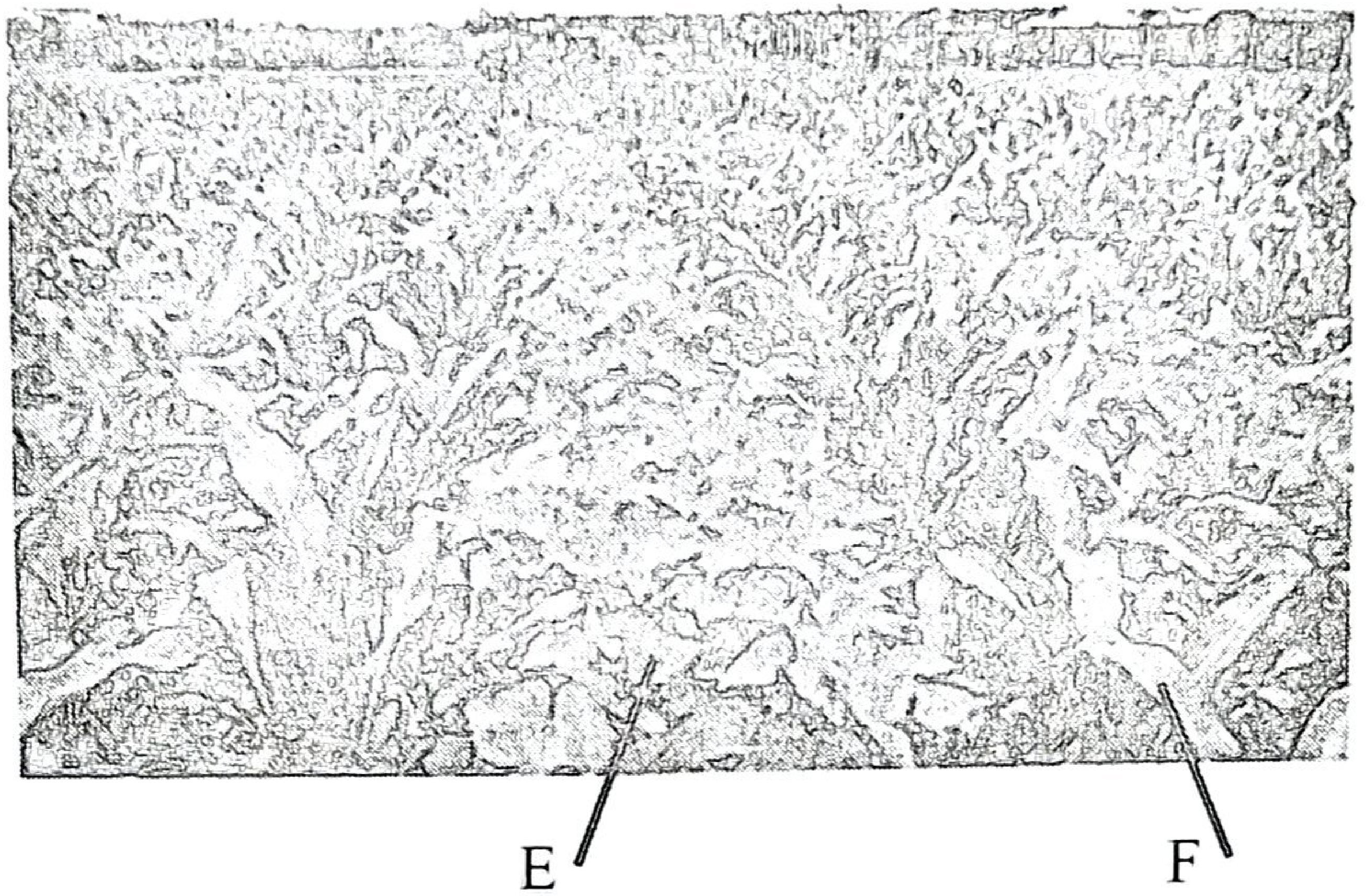
(a) Identify the practice. (1 mark)
(b) State two factors that determine the selection of the crop labelled E. (2 marks)
(c) Give two ways in which the crop labelled F benefits from the practice. (2 marks)
17. A tomato crop infected by a disease shows the following symptoms:
- dry brown lesions on stems, leaves and fruits;
- fruits appear rotten and fall prematurely.
(a) Identify the disease. (1 mark)
(b) Name the causal organism of the disease. (1 mark)
(c) Give three control measures for the disease. (3 marks)
18. The following is a picture showing a sorghum plant infested by a pest.
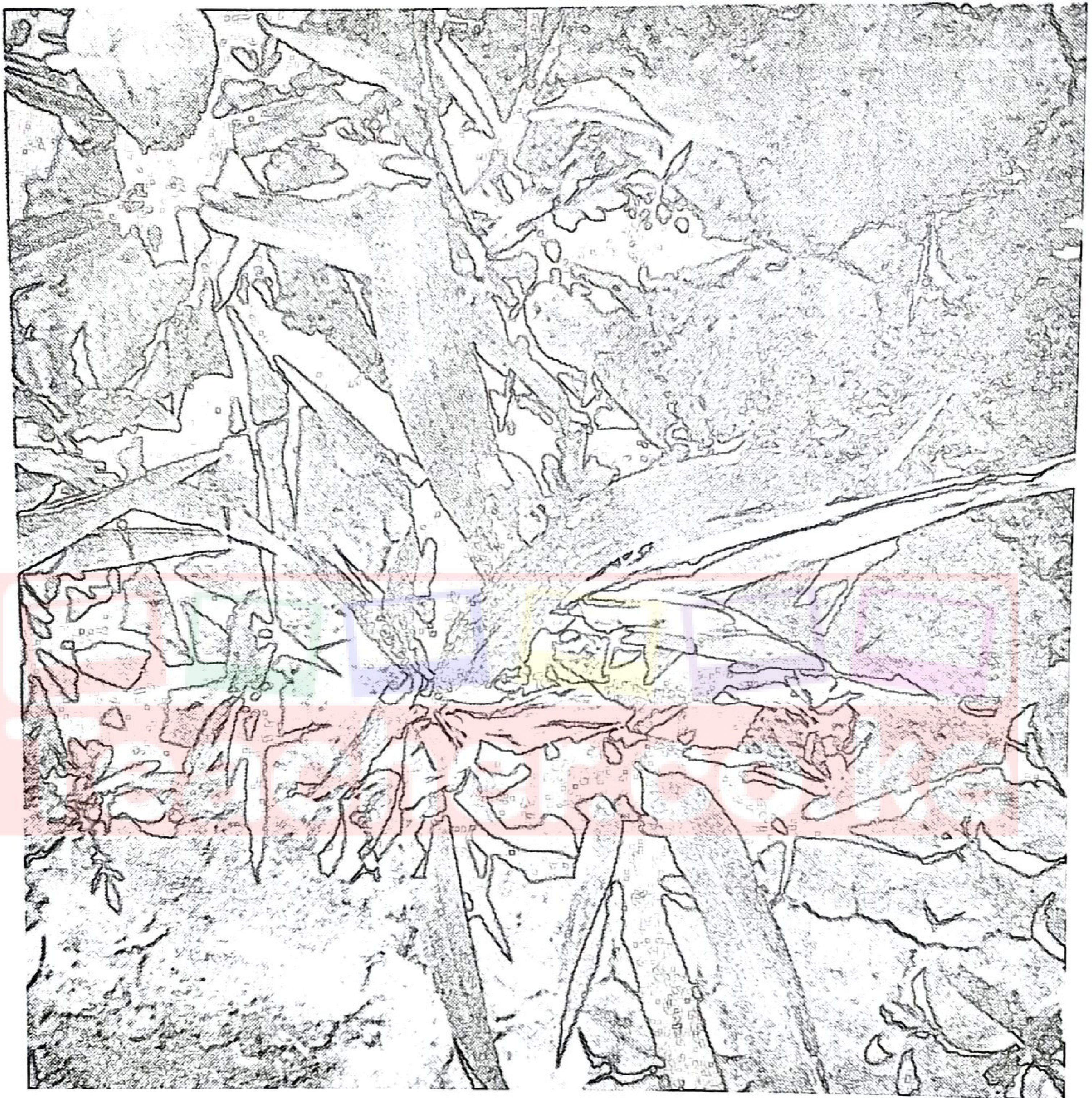
(a) Identify the pest. (1 mark)
(b) Give two reasons for your answer in (a). (2 marks)
(c) State two control measures for the pest. (2 marks)
19. The following is a picture showing a pasture crop infested by a weed.
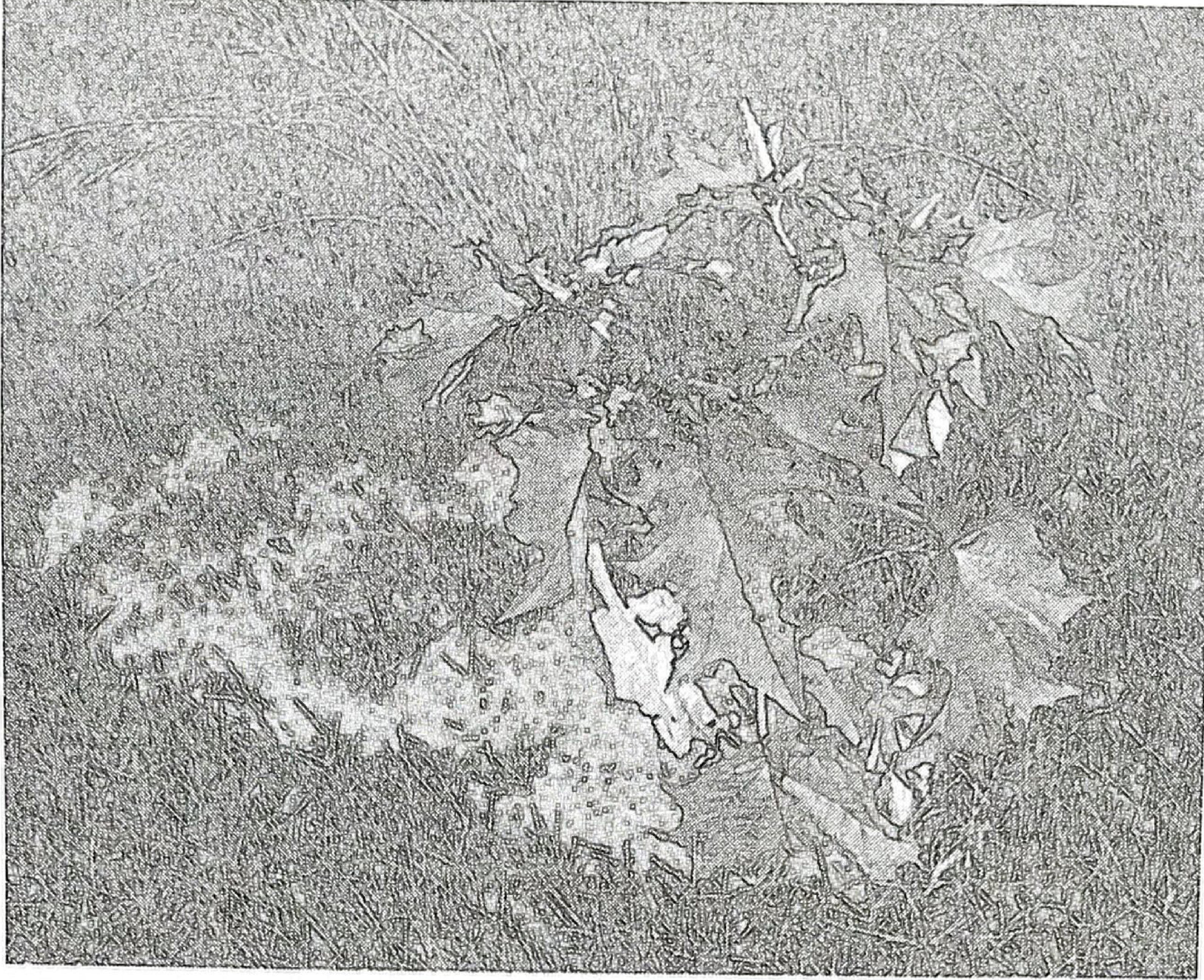
(a) Identify the weed. (1 mark)
(b) Give three effects of the weed on the pasture crop. (3 marks)
(c) State the appropriate growth stage at which the weed should be controlled. (1 mark)
Section C (40 marks)
Answer any two questions from this section.
20. (a) Explain six factors considered when designing a crop rotation programme. (6 marks)
(b) Explain four control measures of river bank erosion. (4 marks)
(c) Explain two ways in which each of the following factors influences crop production: (i) relative humidity; (2 marks) (ii) light; (2 marks) (iii) temperature. (2 marks)
(d) Give four roles of 4-K clubs in Kenya. (4 marks)
21. (a) Describe ten ways in which farmers who grow beans can cope with risks and uncertainties. (10 marks)
(b) Explain ten factors that influence soil erosion. (10 marks)
22. (a) Give five pieces of information kept in feeding records on a dairy farm. (5 marks)
(b) Describe the field management practices for cabbage production. (9 marks)
(c) Give six benefits of establishing onions using a nursery bed instead of direct sowing. (6 marks)