443/2 · AGRICULTURE (Theory) · Paper 2 · Nov. 2025 · 2 hours
Instructions: This paper consists of three sections, A, B and C. Answer all the questions in sections A and B. Answer any two questions in section C. (The source is a phone scan.)
Section A (30 marks)
1. State two benefits of a roof on a cattle dip tank. (1 mark)
2. Name four parts of an egg. (2 marks)
3. State four signs of farrowing in pigs. (2 marks)
4. State four causes of cannibalism in a flock of layers. (2 marks)
5. Give four maintenance practices carried out on a pipe wrench. (2 marks)
6. Give four uses of the gear box on a tractor. (2 marks)
7. Name four layer breeds of chicken. (2 marks)
8. Give two characteristics that distinguish Berkshire from Duroc breeds of pigs. (2 marks)
9. Give four symptoms of foot and mouth disease in sheep. (2 marks)
10. State four reasons why some farmers practise inbreeding in livestock rearing. (2 marks)
11. Give four harmful effects of lice in pig rearing. (2 marks)
12. Name four types of housing structures used in poultry rearing systems. (2 marks)
13. State four ways of controlling pests in bee keeping. (2 marks)
14. Give four reasons why farmers carry out identification practices in livestock rearing. (2 marks)
15. Name two species of fish that can be reared in fresh warm water ponds. (1 mark)
16. State four features of a clean milkman during milking. (2 marks)
Section B (20 marks)
17. The following diagram shows the digestive system of a pig.
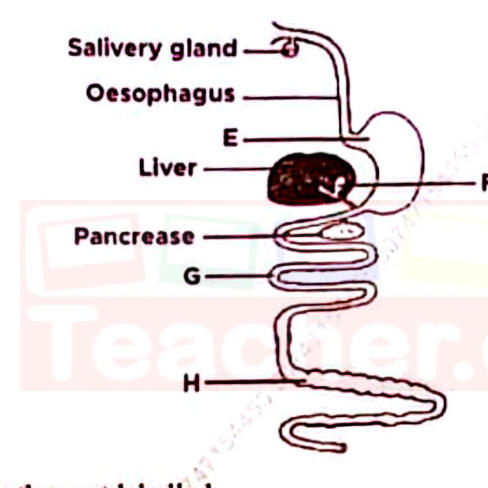
(a) Identify the part labelled: (i) E; (1 mark) (ii) H. (1 mark)
(b) Give one function of each of the parts labelled F and G. (2 marks)
(c) Give one reason why pigs do not effectively digest grass. (1 mark)
18. The following diagram shows chicks suffering from a disease.
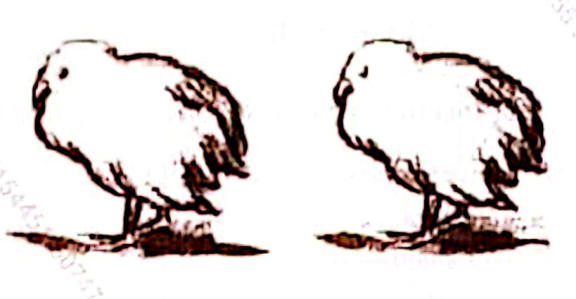
(a) If the chicks' dung contains blood, identify the disease the chicks are suffering from. (1 mark)
(b) Name the causal organism for the disease. (1 mark)
(c) Apart from blood-stained dung, give three other symptoms shown by chicks suffering from the disease. (3 marks)
19. The following diagram shows farm structures for storing crop produce.
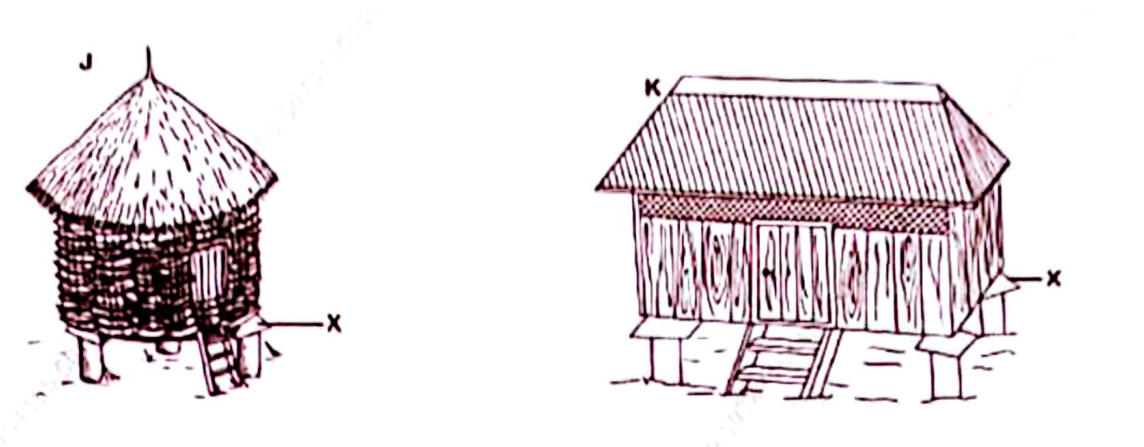
(a) Identify the farm structure labelled J. (1 mark)
(b) Give a reason why a farmer should construct and use the farm structure labelled K instead of the one labelled J. (1 mark)
(c) Give one function of the parts labelled X. (1 mark)
(d) Give two ways in which the farm structure labelled K is made ready for storing crop produce. (2 marks)
20. The following diagram shows two tools used for land preparation.
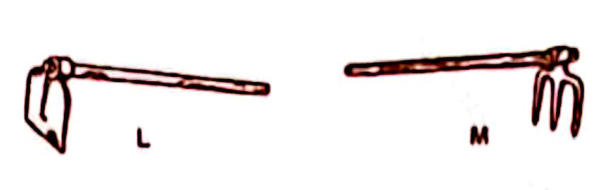
(a) Identify the tool labelled L. (1 mark)
(b) State two conditions that will make a farmer use the tool labelled M instead of the tool labelled L. (2 marks)
(c) State two maintenance practices for the tool labelled L. (2 marks)
Section C (40 marks)
Answer any two questions from this section.
21. (a) Explain five ways of controlling diseases on a goat-rearing farm. (10 marks)
(b) Describe the life cycle of roundworms (Ascaris spp.). (10 marks)
22. (a) Explain the requirements of a good poultry house for chicken rearing. (15 marks)
(b) Explain five factors that influence the siting of a calf pen. (5 marks)
23. (a) Explain five factors considered when selecting a breeding stock. (5 marks)
(b) Describe five ways of marketing beef cattle in Kenya. (5 marks)
(c) Give the function of any five parts of an ox-plough. (10 marks)