443/1 · AGRICULTURE (Theory) · Paper 1 · Dec. 2022 · 2 hours
Instructions: This paper consists of three sections, A, B and C. Answer all the questions in sections A and B. Answer any two questions in section C. Non-programmable silent electronic calculators may be used.
Section A (30 marks)
1. State four human factors that influence agriculture. (2 marks)
2. Name four methods of harvesting agroforestry trees. (2 marks)
3. (a) Differentiate between reafforestation and afforestation. (1 mark)
(b) Name four cover crops farmers can use for soil and water conservation. (2 marks)
4. Name four types of water pumps. (2 marks)
5. State four factors considered when selecting planting materials for forage crops. (2 marks)
6. Which branch of agriculture deals with: (a) utilisation of scarce resources; (1 mark) (b) maintenance of farm tools and equipment? (1 mark)
7. Give four factors that a farmer should consider in order to prepare good quality chicken manure. (2 marks)
8. Give four reasons for keeping labour utilisation records. (2 marks)
9. State four types of land reforms practised in Kenya. (2 marks)
10. Give one use of each of the two types of inventory records kept by farmers. (2 marks)
| Type of inventory record | Use |
|---|---|
11. State four characteristics of nitrogenous fertilisers. (2 marks)
12. Give four reasons why Kenyans should practise agroforestry. (2 marks)
13. Distinguish between a dam and a weir. (1 mark)
14. Name four types of grasses grown in high altitude areas as forage. (2 marks)
15. Give four reasons for preparing a seedbed in crop production. (2 marks)
Section B (20 marks)
16. If a tomato crop is planted at a spacing of 100 cm by 50 cm, calculate the plant population for a plot of land measuring 5 m by 6 m. (5 marks)
17. The diagram below shows a method of grafting.
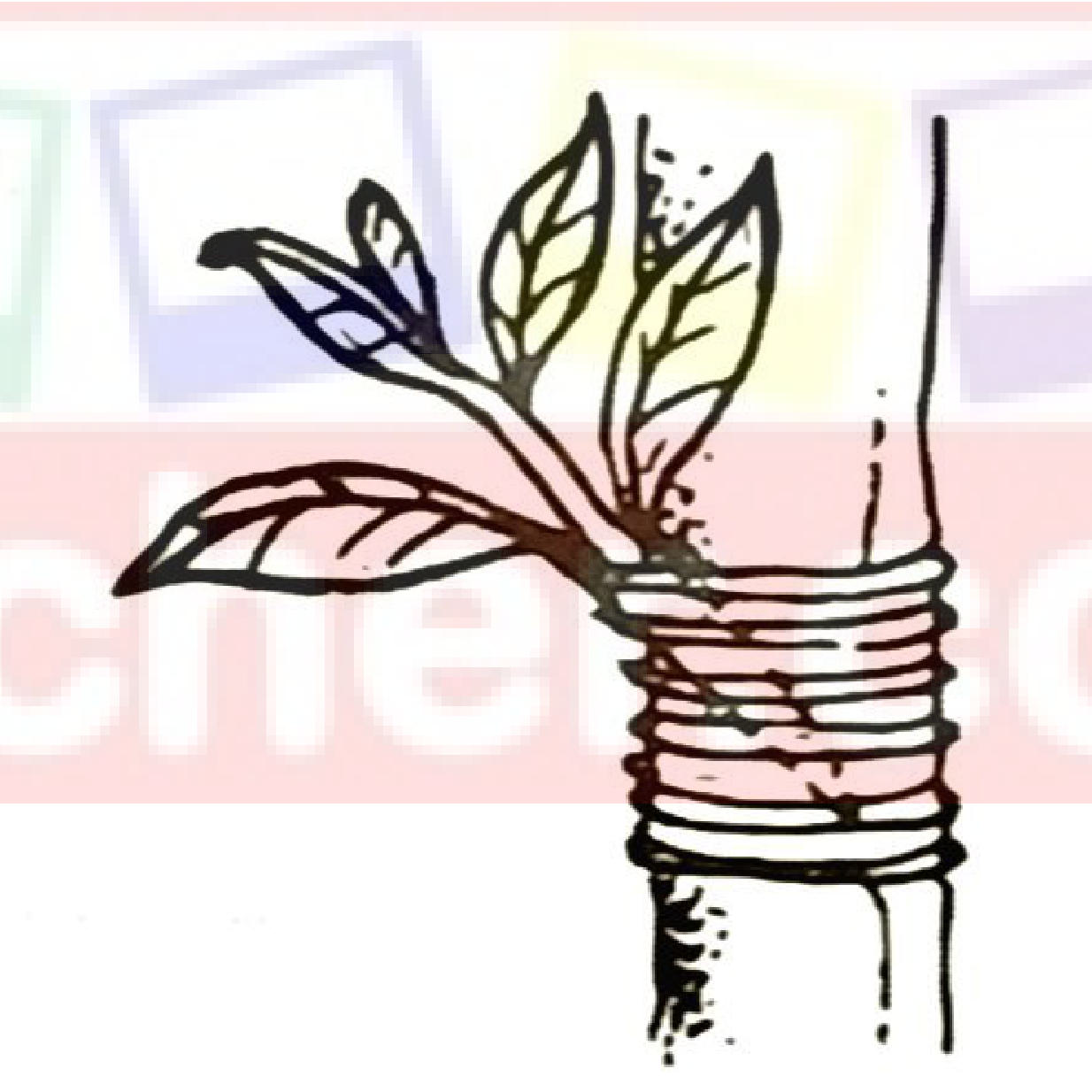
(a) Identify the method of grafting. (1 mark)
(b) Name two other methods of grafting apart from the one illustrated. (2 marks)
(c) Give two reasons why a farmer may prefer using the grafting method illustrated. (2 marks)
18. The diagram below shows a maize cob infected by a certain disease.
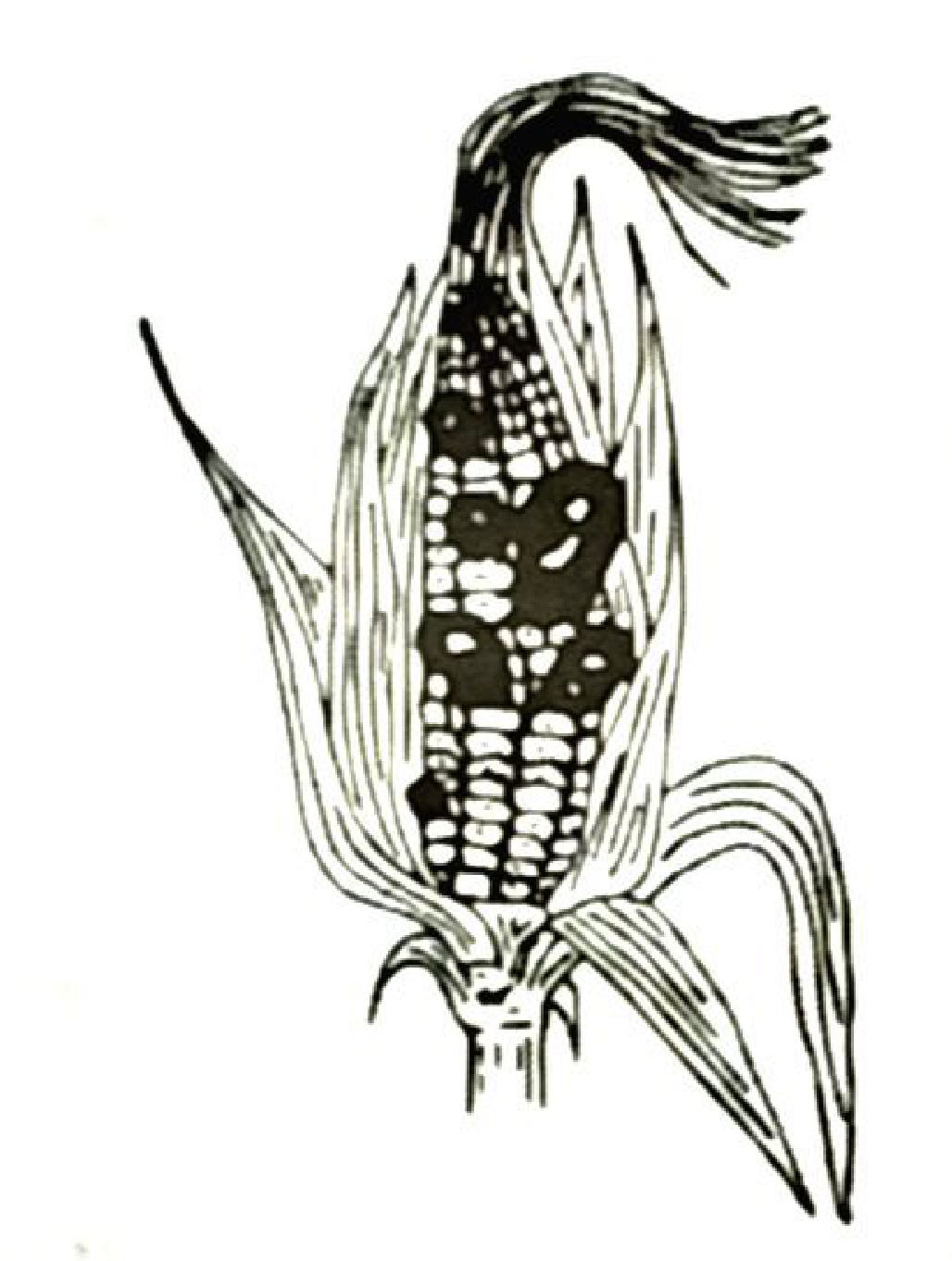
(a) Identify the disease. (1 mark)
(b) State two control measures for the disease. (2 marks)
(c) Name any other two diseases of maize in the field. (2 marks)
19. The diagram below shows a crop rotation programme practised on virgin land for three seasons. Arrows show how crops were rotated after the first season.
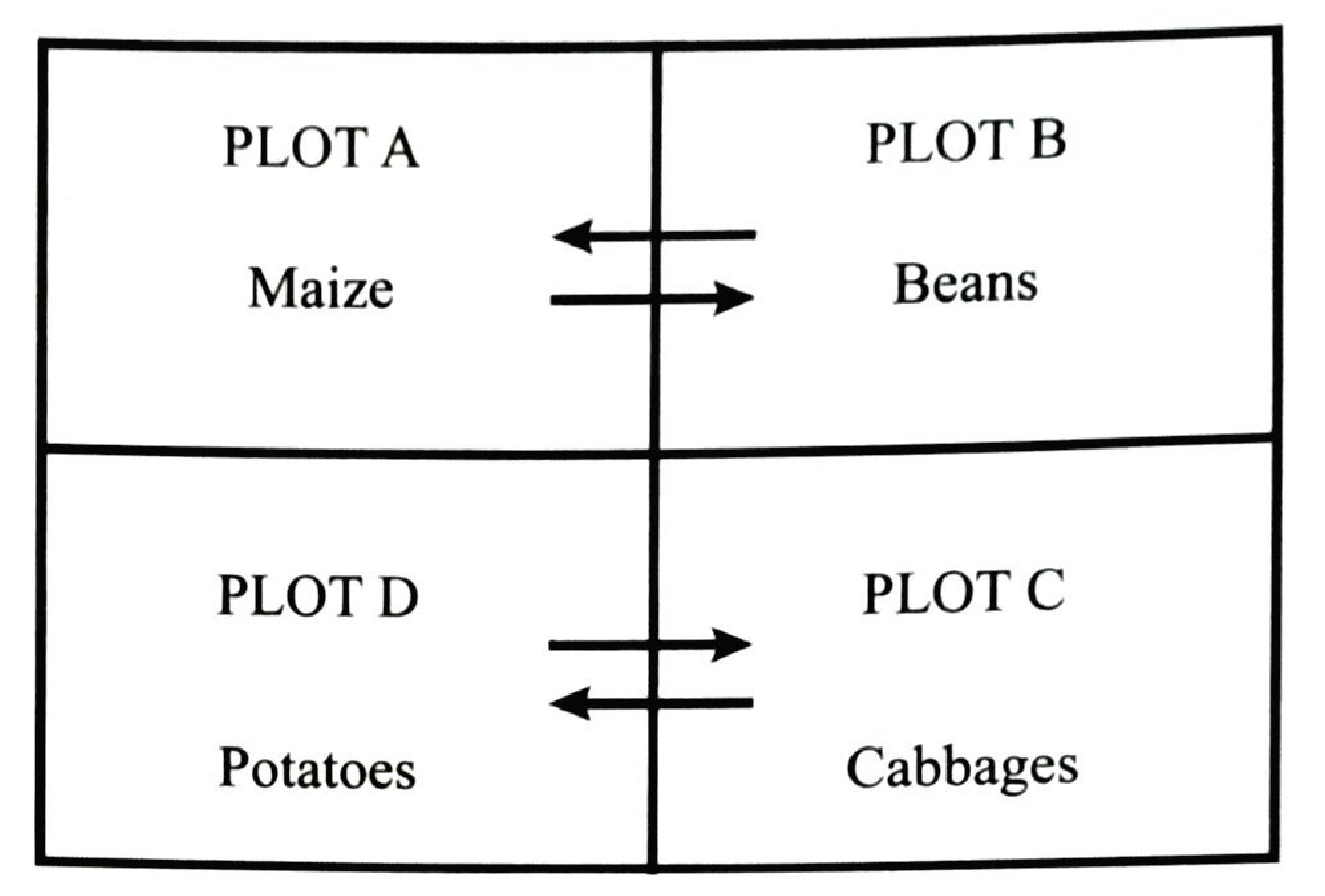
(a) Give one reason why: (i) maize was planted first in plot A; (1 mark) (ii) Irish potato was rotated with cabbage after the first season. (1 mark)
(b) Name two crops that can be planted in place of Irish potatoes in the rotation programme. (2 marks)
(c) Give a reason why it is important to include a grass ley in the rotation programme. (1 mark)
Section C (40 marks)
Answer any two questions from this section.
20. (a) Describe cabbage production under each of the following sub-headings: (i) varieties; (2 marks) (ii) nursery establishment. (5 marks)
(b) Give seven agricultural support services available to wheat farmers in Kenya. (7 marks)
(c) Explain any six cultural methods of weed control. (6 marks)
21. (a) Explain six harmful effects of crop pests. (6 marks)
(b) State four problems farmers encounter when marketing milk. (4 marks)
(c) Give four reasons why farmers should prepare a farm budget. (4 marks)
(d) Describe the harvesting of tea under the following sub-headings: (i) harvesting procedure; (3 marks) (ii) precautions taken during harvesting. (3 marks)
22. (a) Describe five ways in which each of the following affects agriculture: (i) HIV and AIDS; (5 marks) (ii) poor economic growth. (5 marks)
(b) Give five roles of calcium in the growing of tomatoes. (5 marks)
(c) State five details farmers should include in a purchase order. (5 marks)