443/2 · AGRICULTURE (Theory) · Paper 2 · Dec. 2022 · 2 hours
Instructions: This paper consists of three sections, A, B and C. Answer all the questions in sections A and B. Answer any two questions in section C.
Section A (30 marks)
1. Give four reasons why a farmer may use a jembe instead of a disc plough. (2 marks)
2. Name four sheep breeds reared in Kenya. (2 marks)
3. Give four ways in which a farmer can restrain a bull on the farm. (2 marks)
4. Name the four stages ticks go through in their life cycle. (2 marks)
5. State four factors that determine the amount of water taken by an animal. (2 marks)
6. Distinguish between each of the following pairs of terms used in livestock production: (a) selection and breeding; (1 mark) (b) inbreeding and line breeding. (1 mark)
7. State four signs of parturition in goats. (2 marks)
8. Name four materials a farmer requires in order to construct a barbed wire fence. (2 marks)
9. State four symptoms of coccidiosis infection in chicks. (2 marks)
10. State four management practices carried out to prevent the occurrence of parasites in a poultry house. (2 marks)
11. Name four components of milk. (2 marks)
12. State four uses of solar energy on a farm. (2 marks)
13. (a) State the colour difference between the Galla and Saanen goat breeds. (1 mark)
(b) Name one goat breed that is reared for: (i) mohair; (½ mark) (ii) meat. (½ mark)
14. State four ways in which proper housing helps to control livestock diseases. (2 marks)
15. State one use of each of the following farm tools: (a) pruning hook; (b) dosing gun; (c) bow saw; (d) crowbar. (2 marks)
Section B (20 marks)
16. A farmer wants to prepare a 100 kg ration containing 20% DCP from wheat (10% DCP) and sunflower seed cake (35% DCP). Using the Pearson's square method, calculate the quantity of wheat and sunflower seed cake the farmer requires. (5 marks)
17. The picture below shows a poultry rearing system.
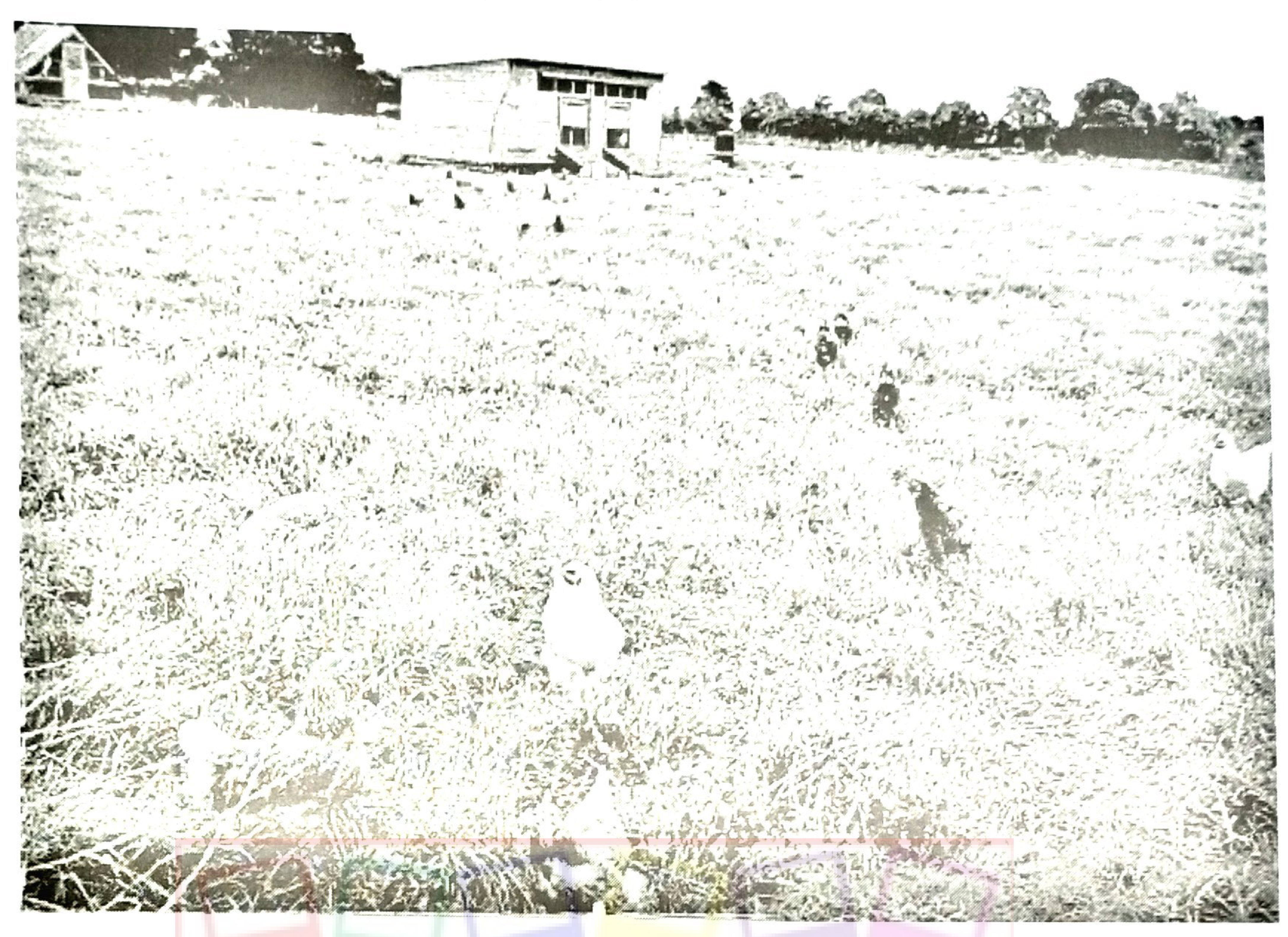
(a) Identify the rearing system. (1 mark)
(b) From the picture, state two ways in which the system can lead to low egg production. (2 marks)
(c) State two ways in which the rearing system can lead to loss of birds. (2 marks)
18. The diagram below shows a practice carried out by poultry farmers to determine the productivity of layer birds.
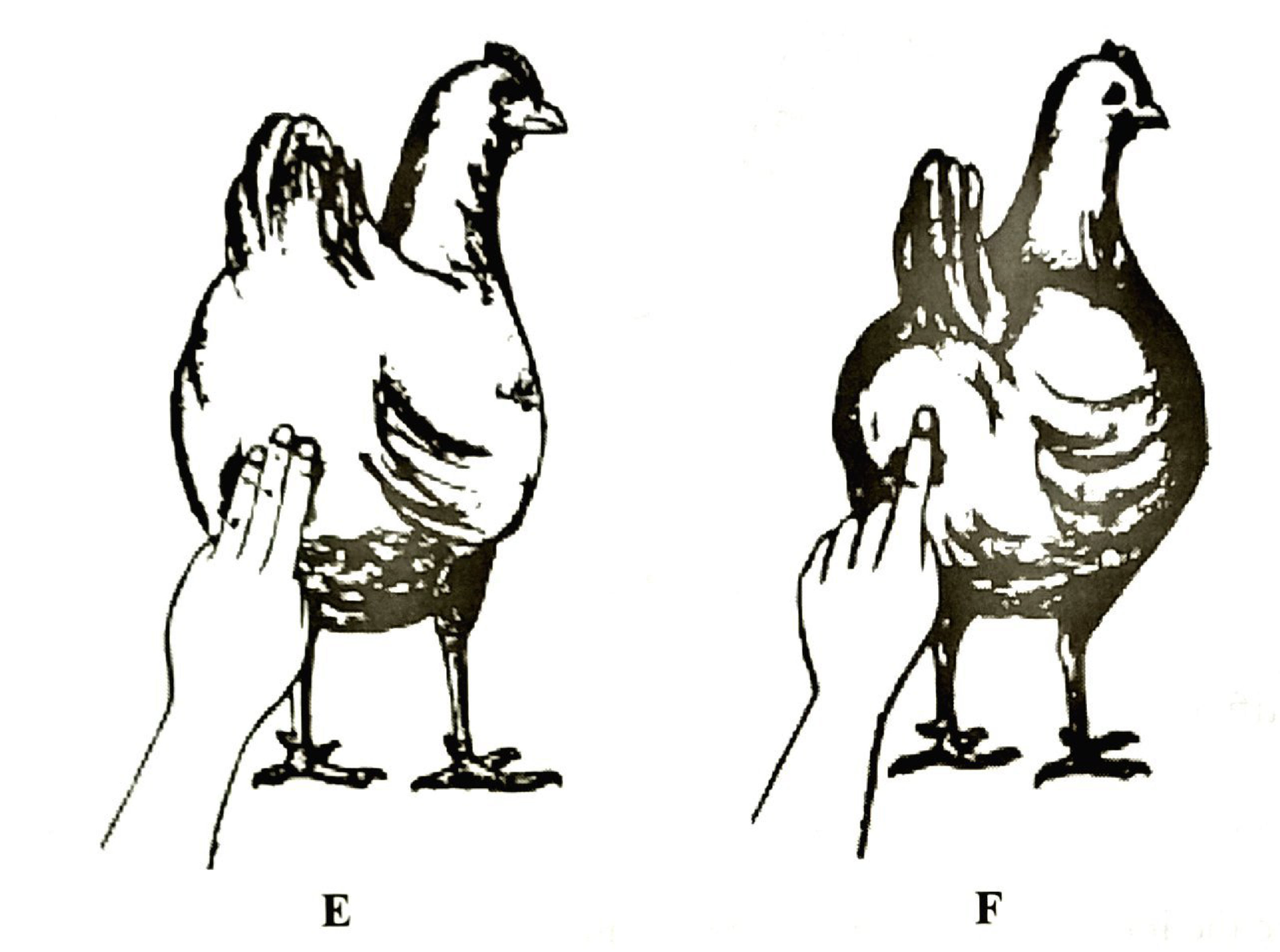
(a) Give one reason for carrying out the practice in poultry rearing. (1 mark)
(b) Apart from the practice shown above, give two other features observed on the birds to determine productivity. (2 marks)
(c) From the diagram, which advice should be given to the farmer on each of the birds: bird E; (1 mark) bird F? (1 mark)
19. Below is a diagram of a livestock parasite.
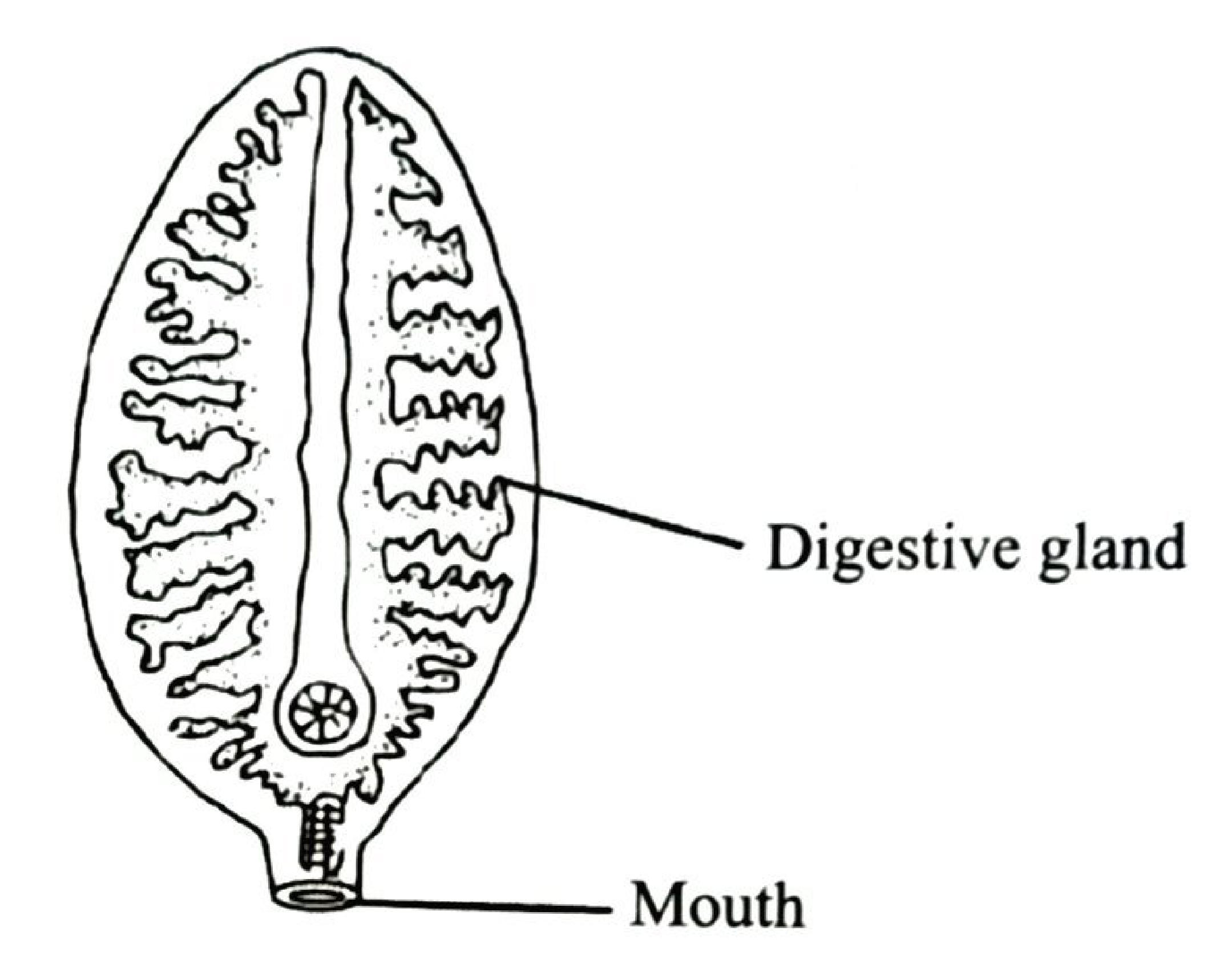
(a) Identify the parasite. (1 mark)
(b) Name the intermediate host of the parasite. (1 mark)
(c) Explain how each of the following practices helps to control the parasite: (i) applying copper sulphate on stagnant water; (1 mark) (ii) drenching infested animals with anthelmintics; (1 mark) (iii) rotational grazing. (1 mark)
Section C (40 marks)
Answer any two questions from this section.
20. (a) Give five disadvantages of natural incubation in poultry rearing. (5 marks)
(b) Describe five ways of minimising stress in a deep litter poultry rearing system. (5 marks)
(c) Describe ten routine management practices carried out during calf rearing. (10 marks)
21. (a) Explain five reasons why farmers use animal-drawn implements. (5 marks)
(b) Describe five maintenance practices for the water cooling system of a tractor. (5 marks)
(c) Explain the difference between a spray race and a cattle dip. (10 marks)
22. (a) Describe ten routine management practices carried out in the rearing of male calves. (10 marks)
(b) Describe anthrax disease under each of the following sub-headings: (i) causal organism; (1 mark) (ii) symptoms of infection; (4 marks) (iii) control measures. (5 marks)