312/2 · GEOGRAPHY · Paper 2 · Mar. 2022 (KCSE 2021) · 2¾ hours
Instructions: This paper consists of two sections, A and B. Answer all the questions in section A. Answer question 6 and any other two questions from section B.
Section A
1. (a) State two climatic conditions favouring coffee growing in the Kenya highlands. (2 marks)
(b) Give three problems facing coffee farming in Kenya. (3 marks)
2. (a) What is land reclamation? (2 marks)
(b) State three physical factors that influenced the location of the Perkerra Irrigation Scheme. (3 marks)
3. (a) Differentiate between game reserves and national parks. (2 marks)
(b) Give three ways in which tourism is significant to Switzerland. (3 marks)
4. (a) Apart from railway transport, name two other means of transport. (2 marks)
(b) Outline three advantages of railway transport. (3 marks)
5. (a) Identify two types of internal trade. (2 marks)
(b) State three economic benefits of the European Union to member countries. (3 marks)
Section B
Answer question 6 and any other two questions from this section.
6. Study the photograph provided and answer question 6(a).
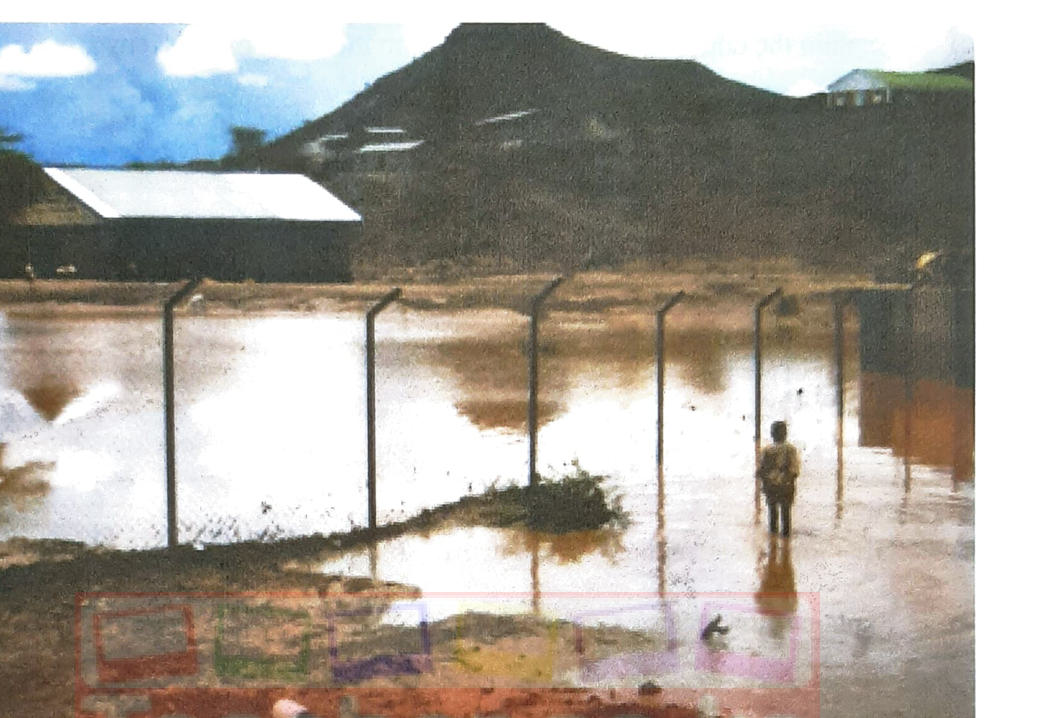
(a) (i) Identify the type of photograph shown above. (1 mark) (ii) What time of the day was the photograph taken? (1 mark) (iii) Draw a rectangle measuring 15 cm by 10 cm. On it, sketch and label the features shown on the photograph. (6 marks)
(b) (i) List three rivers in Kenya which cause large-scale flooding. (3 marks) (ii) Explain four effects of flooding in Kenya. (8 marks)
(c) Explain three ways through which floods can be controlled in Kenya. (6 marks)
7. (a) (i) Name two main horticultural crops that are grown in Kenya. (2 marks) (ii) Why is horticultural produce mainly exported by air? (3 marks)
(b) Give four reasons why flowers are mostly grown in greenhouses in Kenya. (4 marks)
(c) Explain the contribution of horticulture to the economy of Kenya. (8 marks)
(d) Explain the differences between horticulture farming in Kenya and the Netherlands. (8 marks)
8. (a) Define the term energy. (2 marks)
(b) (i) Apart from water, list three other renewable sources of energy which are exploited in Kenya. (3 marks) (ii) Explain four physical factors that favoured the development of the Seven Forks hydro-electric power projects. (8 marks)
(c) Give four disadvantages of using coal as a source of energy. (4 marks)
(d) Explain four effects of energy crisis in Kenya. (8 marks)
9. (a) (i) Apart from motor-vehicle assembly, name three other non-agricultural manufacturing industries in Kenya. (3 marks) Use the map of Kenya below to answer question 9(a)(ii).
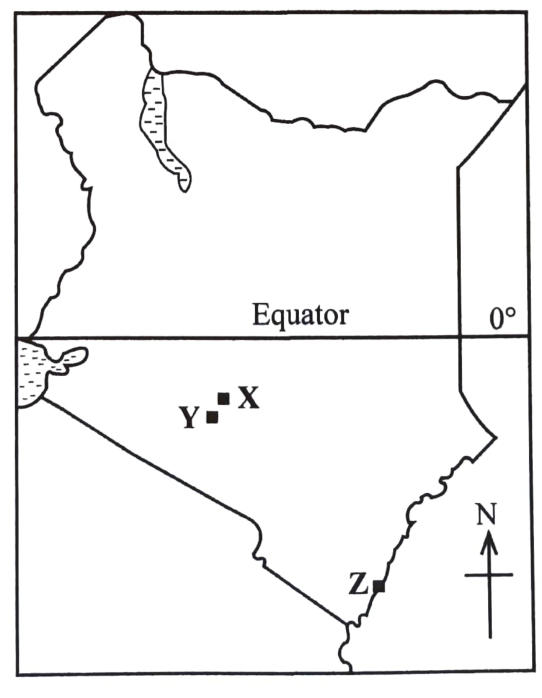
(ii) Name the towns marked X, Y and Z where motor vehicles are assembled. (3 marks)
(b) Explain how each of the following factors influences the location of industries: (i) transport and communication; (4 marks) (ii) labour. (4 marks)
(c) State three reasons why the government of Kenya encourages the establishment of industries in rural areas. (3 marks)
(d) Explain four challenges of industrialisation in Kenya. (8 marks)
10. (a) State three reasons why it is necessary for a country to carry out a population census. (3 marks)
(b) Explain economic factors that influence population distribution in East Africa. (6 marks)
(c) (i) Outline four measures that have been taken by the government of Kenya to reduce the infant mortality rate. (4 marks) (ii) State four effects of a high ageing population in a country. (4 marks)
(d) Explain four causes of urban–rural migration in Kenya. (8 marks)