443/2 · AGRICULTURE (Theory) · Paper 2 · Mar. 2022 (KCSE 2021) · 2 hours
Instructions: This paper consists of three sections, A, B and C. Answer all the questions in sections A and B. Answer any two questions in section C.
Section A (30 marks)
1. Give four maintenance practices carried out on a knapsack sprayer. (2 marks)
2. State four reasons why rabbits are kept by farmers in Kenya. (2 marks)
3. State four maintenance practices carried out on a piggery unit. (2 marks)
4. Name the four stomach compartments of a ruminant. (2 marks)
5. State four causes of stress in poultry. (2 marks)
6. Give one reason why the milkman should: (a) milk at regular intervals; (b) avoid milking with wet hands; (c) milk quickly and evenly; (d) practise complete milking. (2 marks)
7. State four factors that determine the amount of feed an animal consumes. (2 marks)
8. Give one use of each of the following farm tools: (a) pipe wrench; (b) tenon saw; (c) spoke shave; (d) elastrator. (2 marks)
9. State four control measures for brucellosis in cattle. (2 marks)
10. (a) Give two roles of wood shavings used as litter in the artificial brooder. (1 mark) (b) Give two reasons why a chicken brooder should have a round shape. (1 mark)
11. Name four parts of the ignition system of a petrol engine. (2 marks)
12. (a) State two signs that show a rabbit is about to give birth. (1 mark) (b) If a doe was served on 7th March 2021, determine the date it gave birth. (½ mark) (c) What is the name given to the young one of a rabbit? (½ mark)
13. State four advantages of artificial calf feeding. (2 marks)
14. Give four characteristics of clean milk. (2 marks)
15. (a) Name two methods of service used in livestock breeding. (1 mark) (b) Name two cattle diseases controlled through Government-imposed quarantine in Kenya. (1 mark)
Section B (20 marks)
16. The photographs R and S show farm implements.
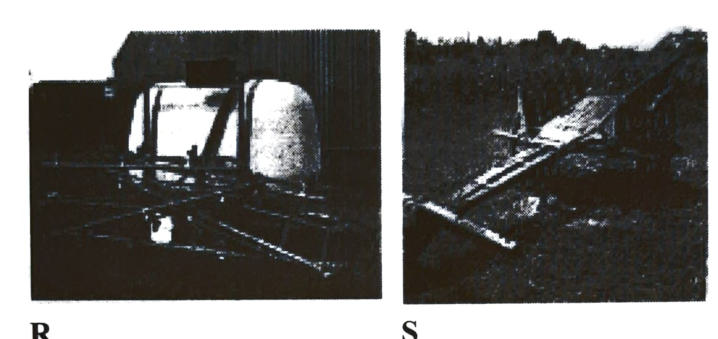
(a) Name the source of power used to operate the farm implement labelled: R; (1 mark) S. (1 mark)
(b) State the means by which the farm implement labelled S is attached to its source of power. (1 mark)
(c) Give two maintenance practices carried out on the implement labelled R. (2 marks)
17. The diagram below shows a parasite commonly observed on sheep.
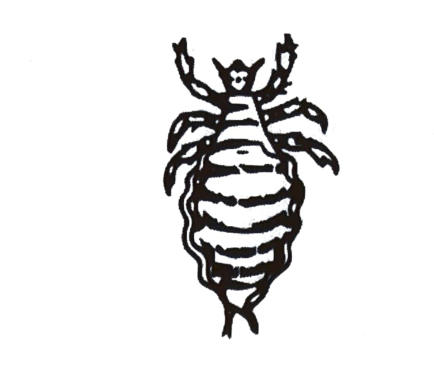
(a) Identify the parasite. (1 mark)
(b) State four harmful effects of the parasite in sheep rearing. (4 marks)
18. The diagram below shows a method of incubation in poultry rearing.
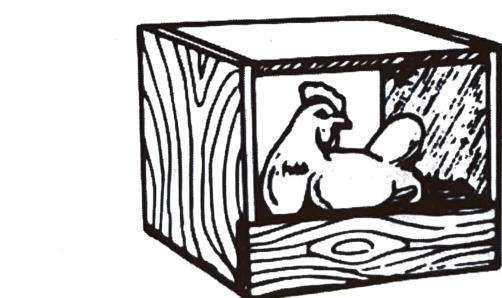
(a) Identify the method of incubation shown above. (1 mark)
(b) State four advantages of the method of incubation shown. (4 marks)
19. A poultry farmer wants to prepare 200 kilograms of chick mash containing 20% digestible crude protein (DCP). Calculate the amount of maize (10% DCP) and fish meal (60% DCP) the farmer requires to make the chick mash. Use the Pearson's square method and show your working. (5 marks)
Section C (40 marks)
Answer any two questions from this section.
20. (a) Describe calf scours under the following sub-headings: (i) causal organism; (1 mark) (ii) predisposing factors; (3 marks) (iii) control measures. (4 marks)
(b) Describe the rearing of day-old layer chicks up to the age of eight weeks. (12 marks)
21. (a) Describe milk secretion in a dairy cow. (5 marks)
(b) Describe six factors that are considered when selecting a gilt for breeding. (6 marks)
(c) Give nine reasons why the battery cage system of rearing is popularly used by large-scale poultry farmers. (9 marks)
22. (a) Describe five management practices carried out on a fish pond. (5 marks)
(b) (i) Give five reasons for farm mechanisation. (5 marks) (ii) Describe six symptoms observed on a calf heavily infested with internal parasites. (6 marks)
(c) Give four routine rearing practices in the handling of livestock. (4 marks)