233/1 · CHEMISTRY (Theory) · Paper 1 · Nov. 2023 · 2 hours
Instructions: Answer all the questions in the spaces provided. Non-programmable silent electronic calculators and KNEC mathematical tables may be used. All working must be clearly shown where necessary.
1. The atomic numbers of nitrogen and fluorine are 7 and 9 respectively.
(a) Draw electron dot (•) and cross (×) diagrams to illustrate bonding in the molecules of: (i) nitrogen; (1 mark) (ii) fluorine. (1 mark)
(b) With reference to the diagrams in (a), state why fluorine is more reactive than nitrogen. (1 mark)
2. Classification of types of salts includes normal and acid salts.
(a) Give the name of another type of salt. (1 mark)
(b) (i) Describe how an acid salt can be prepared using 0.1 M sulphuric(VI) acid and 0.1 M sodium hydroxide. (1 mark)
(ii) Write an equation for the reaction in b(i). (1 mark)
3. Complete Table 1 by writing the formulae of all the products formed when the metal nitrates are heated strongly. (3 marks)
| Nitrate | Formulae of products |
|---|---|
| Potassium nitrate | |
| Lead(II) nitrate | |
| Silver nitrate |
4. Zinc metal is extracted from zinc blende ore through the following processes: concentration, roasting and reduction.
(a) Explain how the ore is concentrated. (2 marks)
(b) Write an equation for the reaction that takes place when the ore is roasted. (1 mark)
5. Figure 1 shows how the solubility of oxygen varies with changes in temperature.
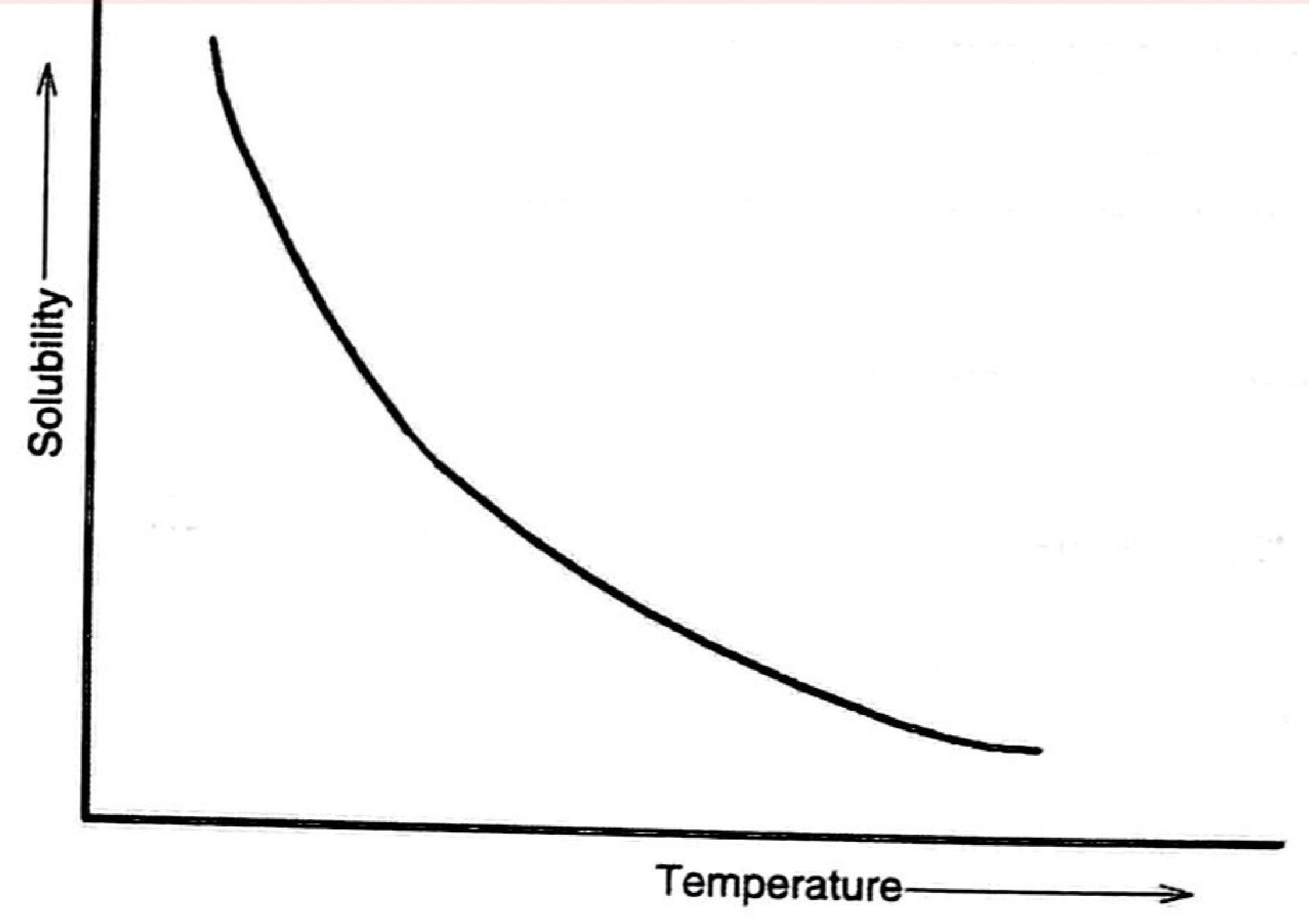
(a) Explain using kinetic theory why the solubility varies as shown. (2 marks)
(b) With reference to Figure 1, explain the pollution effect that may be caused by a large increase in the temperature of sea water. (1 mark)
6. A flow diagram for production of sulphuric(IV) [sic — sulphuric(VI)] acid is shown in Figure 2.
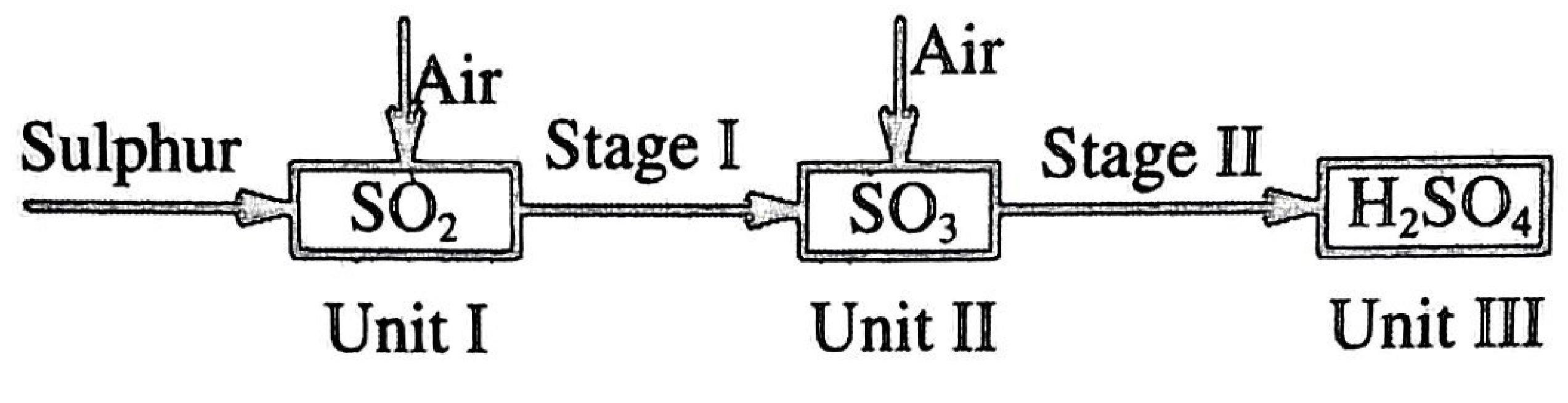
(a) State the optimum conditions necessary for carrying out the reaction in unit II. (1 mark)
(b) Stage II takes place in two steps. Describe the steps. (2 marks)
7. The following equilibrium exists in aqueous ammonia:
(a) With reference to this equilibrium, explain why ammonia is a weak base. (1 mark)
(b) When aqueous ammonia is added drop-wise to aqueous copper(II) sulphate, a blue precipitate is formed. The blue precipitate dissolves giving a deep blue solution. Write the formula of the substance responsible for the: (i) blue precipitate; (1 mark) (ii) deep blue colour. (1 mark)
8. The molecular formula of two straight chain hydrocarbons is C₄H₆.
(a) Give the general formula of the homologous series to which the hydrocarbons belong. (1 mark)
(b) Draw the structures of the two compounds and give their names. (2 marks)
9. Water hardness may be temporary or permanent.
(a) Write the formula of an ion that causes temporary hardness. (1 mark)
(b) Temporary hardness can be removed by boiling. Give one disadvantage of using this method in industries. (1 mark)
(c) State one method that can be used to remove permanent hardness. (1 mark)
10. (a) Figure 3 shows an energy level diagram for the formation of hydrogen fluoride.
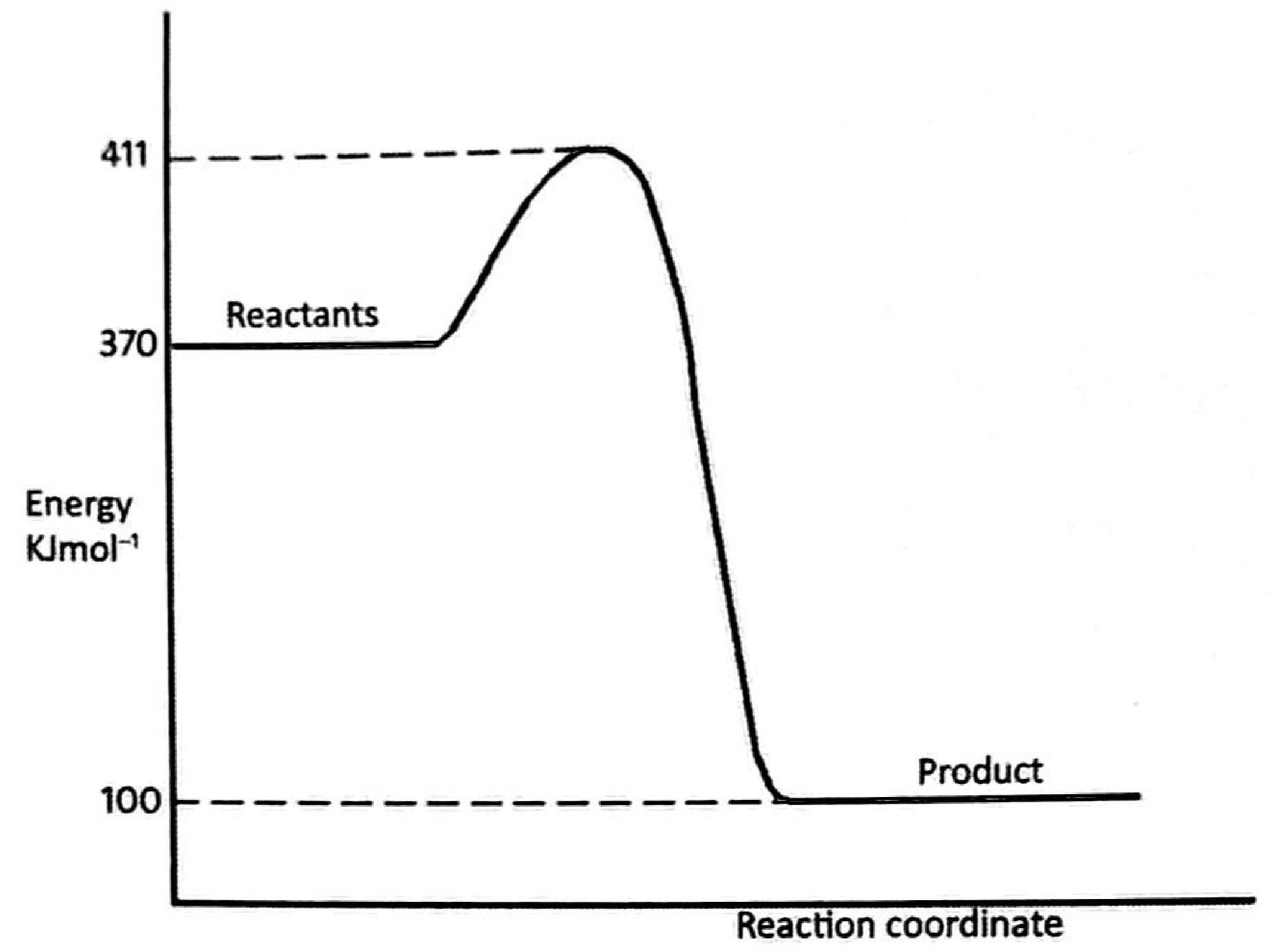
Calculate the: (i) enthalpy change for the formation of hydrogen fluoride; (1 mark) (ii) activation energy of the reaction. (1 mark)
11. At high temperature, hydrogen and oxygen react as shown in the following equation:
In an experiment, a mixture containing 200 cm³ oxygen and 300 cm³ hydrogen was heated to form water.
(a) Determine which gas was in excess and by how much. (1 mark)
(b) Calculate the volume of water that was formed. (1 mark)
(c) Explain how one could confirm that the product was pure water. (1 mark)
12. Silk and rubber are examples of natural polymers.
(a) Give the name of another natural polymer. (1 mark)
(b) State the sources of: (i) silk; (1 mark) (ii) natural rubber. (1 mark)
13. (a) Give the formula of the compound referred to as rust. (1 mark)
(b) Four test tubes were set up to investigate rusting of iron as shown in Figure 4. The set-up was allowed to stand for one week.
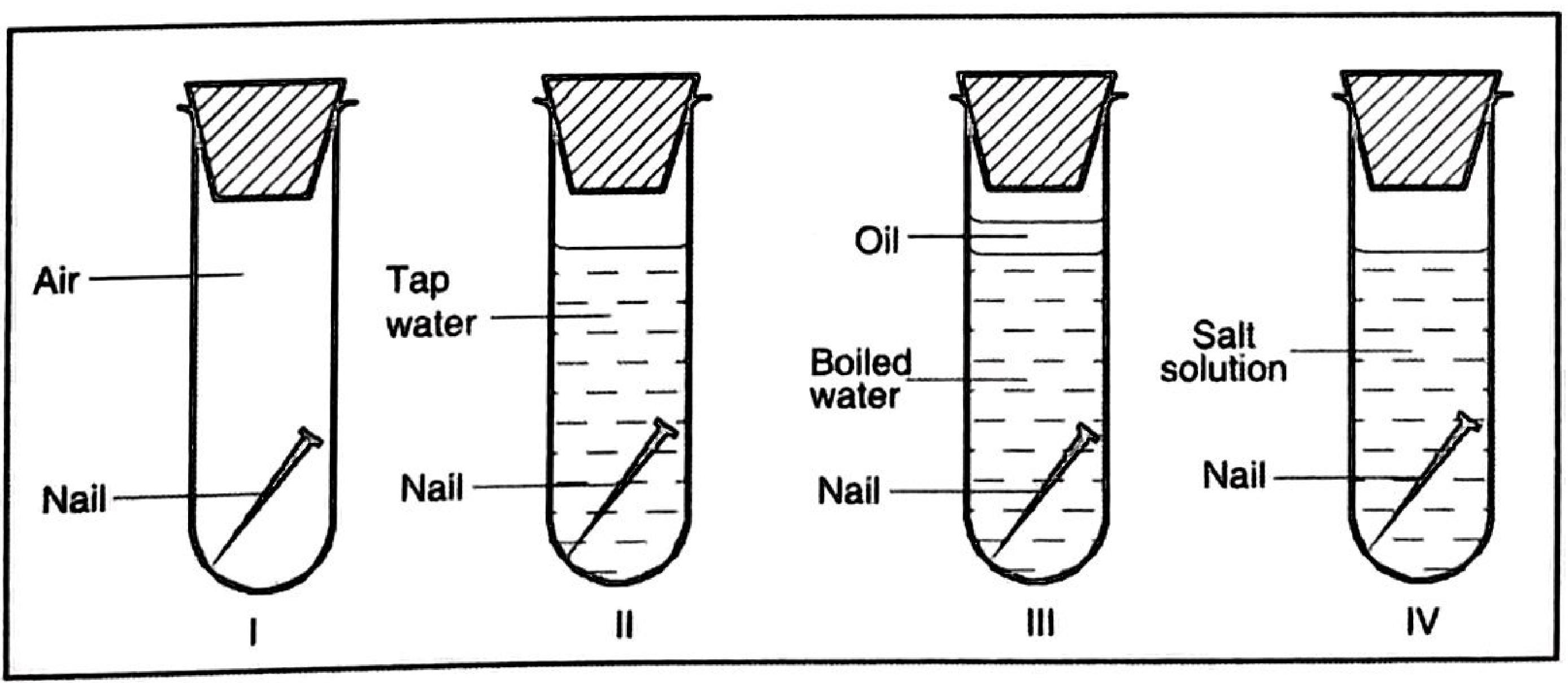
Explain why:
(i) no rusting took place in test tube III; (1 mark)
(ii) select the test tube in which there was the highest amount of rust. Give a reason. (1 mark)
14. (a) Avogadro's constant is mol⁻¹. Determine the total number of ions that are present in 500 cm³ of 2.0 M calcium nitrate. (2 marks)
(b) The electrical conductivity of 2.0 M calcium nitrate is higher than that of 2.0 M potassium nitrate. Explain. (1 mark)
15. Carbon(IV) oxide and methane are gases found in the atmosphere.
(a) State one disadvantage of carbon(IV) oxide in the atmosphere. (1 mark)
(b) Name one source of emissions of methane into the atmosphere. (1 mark)
(c) State how emissions of carbon(IV) oxide into the atmosphere can be reduced. (1 mark)
16. 5.70 g of a chloride of element D was found to contain 4.55 g of chlorine.
(a) Determine the empirical formula of the chloride. (D = 27.0; Cl = 35.5) (2 marks)
(b) Given that the relative formula mass of the chloride is 267, determine its molecular formula. (1 mark)
17. Table 2 shows the boiling points of ethane, butane and ethanol. (H = 1.0; C = 12.0; O = 16.0)
| Compound | CH₃CH₃ | CH₃CH₂CH₂CH₃ | CH₃CH₂OH |
|---|---|---|---|
| Relative molecular mass | 30 | 58 | 46 |
| Boiling point, °C | −88.6 | −0.5 | 78.5 |
Give reasons for the following:
(a) boiling point of butane is higher than that of ethane; (1½ marks)
(b) boiling point of ethanol is higher than that of butane. (1½ marks)
18. Small pieces of beryllium, magnesium and calcium metals were placed in test tubes containing cold distilled water mixed with phenolphthalein indicator as shown in Figure 5.
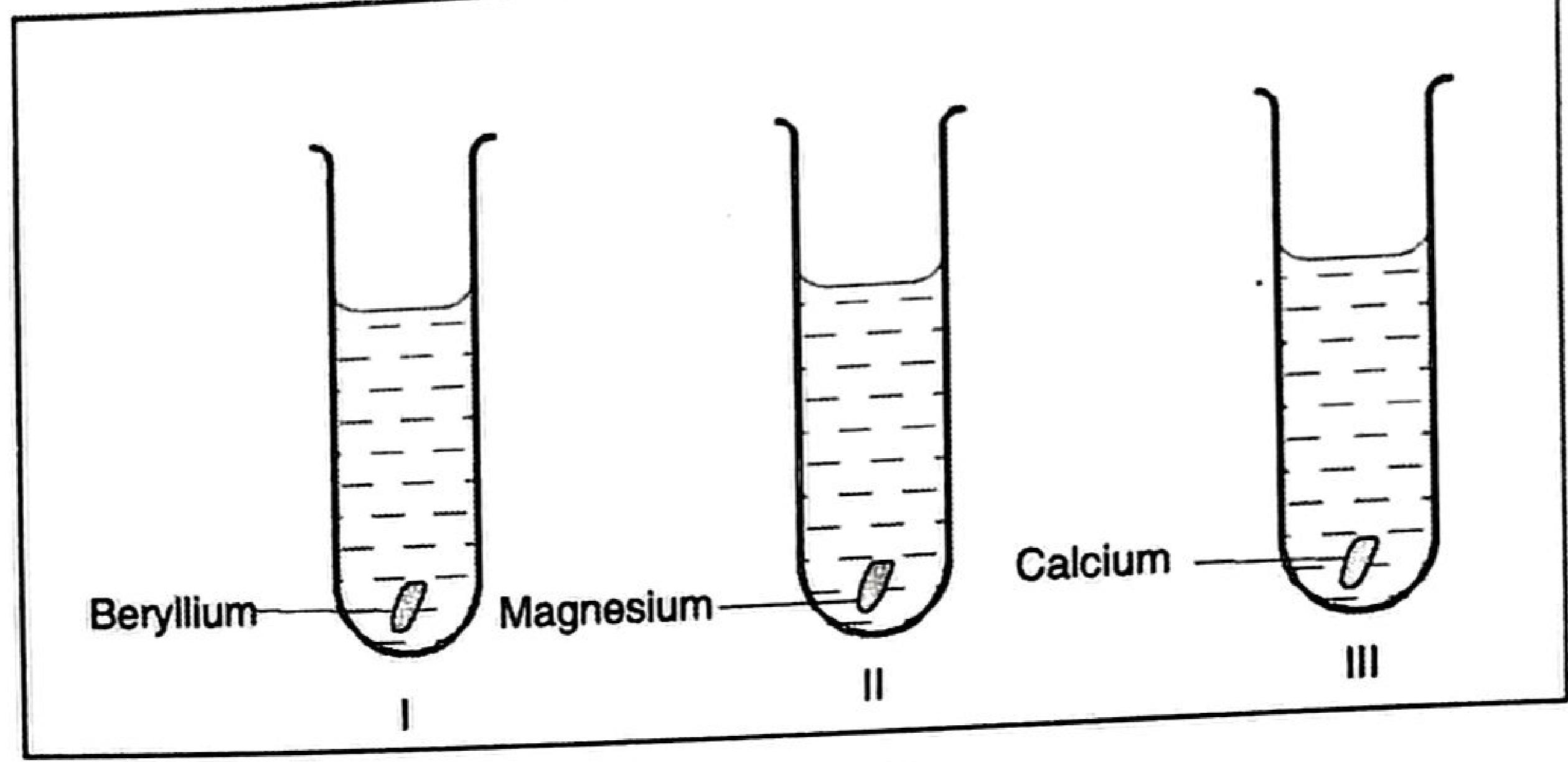
State and explain the observations that were made in each of the following test tubes: Test tube I; (1 mark) Test tube II; (1 mark) Test tube III. (1 mark)
19. A laboratory assistant wanted to investigate the effect of an electric current on substances. Figure 6 shows the arrangement of the apparatus used.
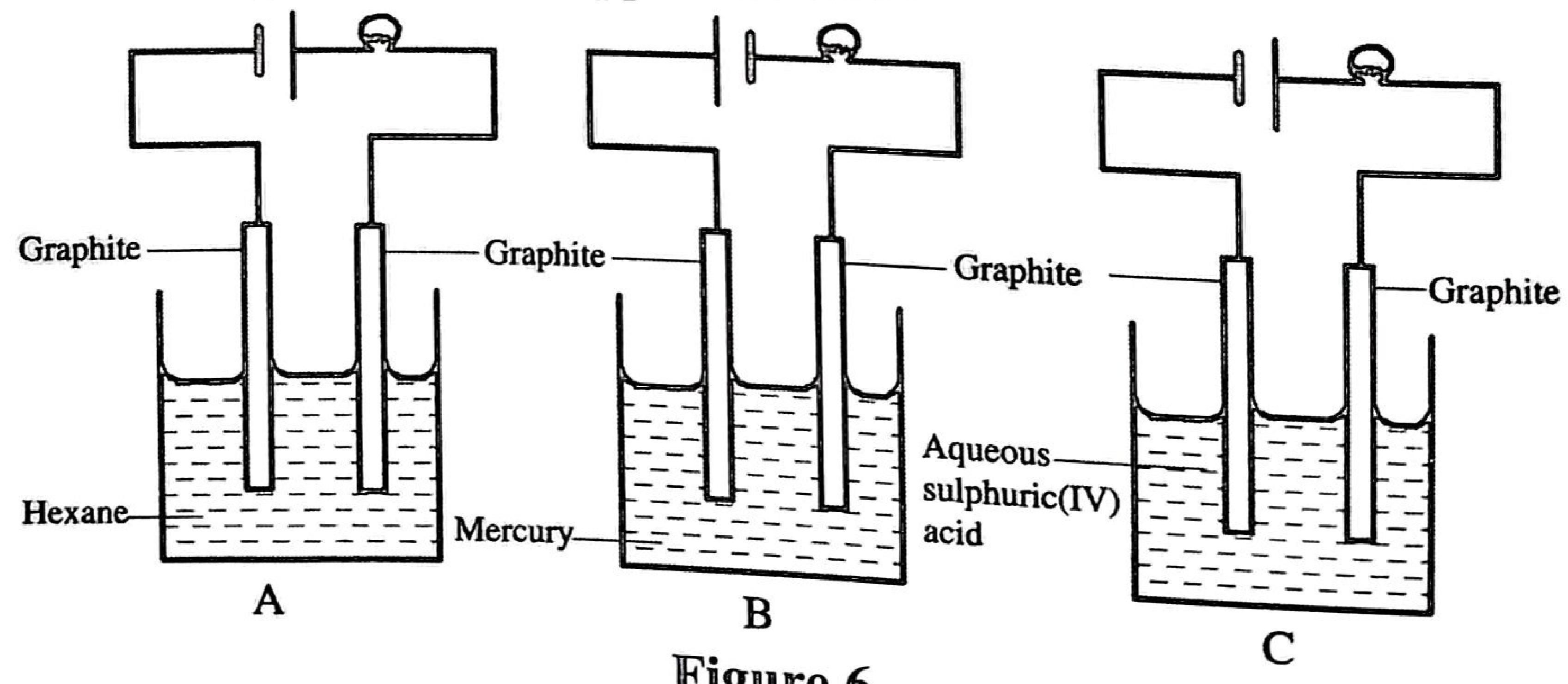
Explain why:
(a) in A, the bulb did not light up and no electrolysis took place; (1 mark)
(b) in B, the bulb lit but no electrolysis took place; (1 mark)
(c) in C, the bulb lit and electrolysis took place. (1 mark)
20. Carbon-14, ¹⁴C, is a radioactive isotope of carbon. It decays to form an isotope of nitrogen. (Atomic numbers: N = 7; C = 6)
(a) Write a nuclear equation for the decay process. (1 mark)
(b) Archaeologists calculate the age of organic matter using the proportion of carbon-14 present and the half-life of carbon-14.
(i) State what is meant by the term half-life of carbon-14. (1 mark)
(ii) Given that the half-life of carbon-14 is 5570 years, calculate the age of a piece of bone found to contain as much carbon-14 as living matter. (1 mark)
21. A student used the following procedure when standardising sodium hydroxide. The student placed 25.00 cm³ of the hydroxide in a conical flask and titrated it with 0.1 M hydrochloric acid using phenolphthalein indicator. The average titre was 21.50 cm³ of the acid. State and explain how each of the following steps in the procedure may have affected the titre value:
(a) the student rinsed the conical flask with the sodium hydroxide before using it; (1 mark)
(b) the student did not rinse the freshly cleaned burette with the hydrochloric acid before filling it; (1 mark)
(c) the student used about 2.0 cm³ of the phenolphthalein indicator. (1 mark)
22. The setup shown in Figure 7 (a) was used to determine the approximate percentages of the major components of air.
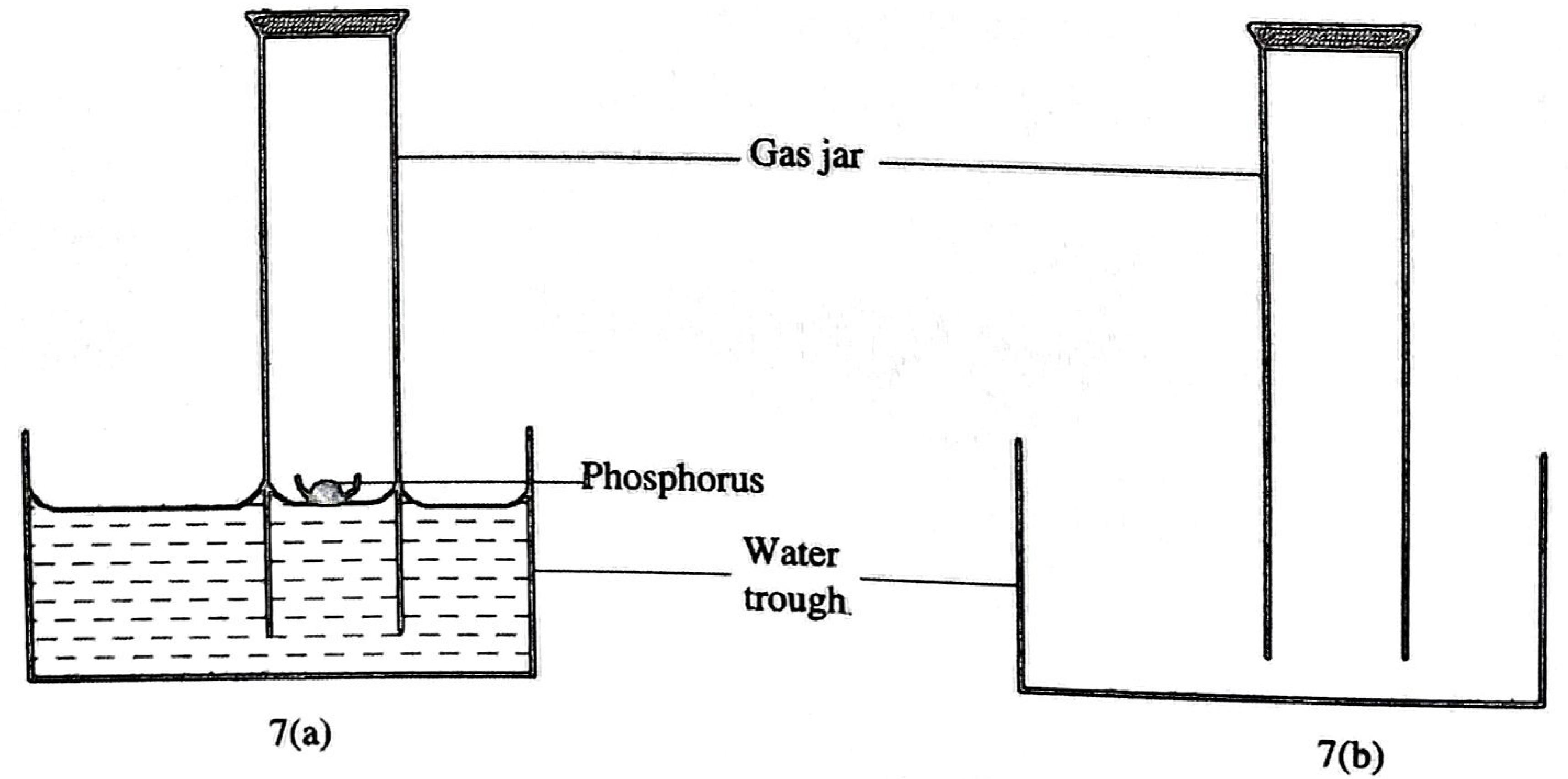
(a) Complete Figure 7 (b) to show the setup after it was left standing until no further changes were observed. (1 mark)
(b) Explain how the percentages of the major components of air are calculated. (2 marks)
23. The heat energy value of a fuel is defined as the amount of energy produced by 1.0 gram of the fuel. (C = 12.0; H = 1.0; O = 16.0)
(a) Calculate the heat energy values of the fuels, hydrogen and ethanol, and complete Table 3. (1 mark)
| Fuel | Enthalpy of combustion (kJ mol⁻¹) | Heat energy value (kJ g⁻¹) |
|---|---|---|
| H₂ | 286.0 | |
| C₂H₅OH | 1371.0 |
(b) Other than its heat energy value, state one advantage of using hydrogen and ethanol as fuels: (i) hydrogen; (1 mark) (ii) ethanol. (1 mark)
24. Study the structures of substances L and M shown in Figure 8 and complete Table 4 by giving the names that describe the type of structure and bonding in each substance. (2 marks)
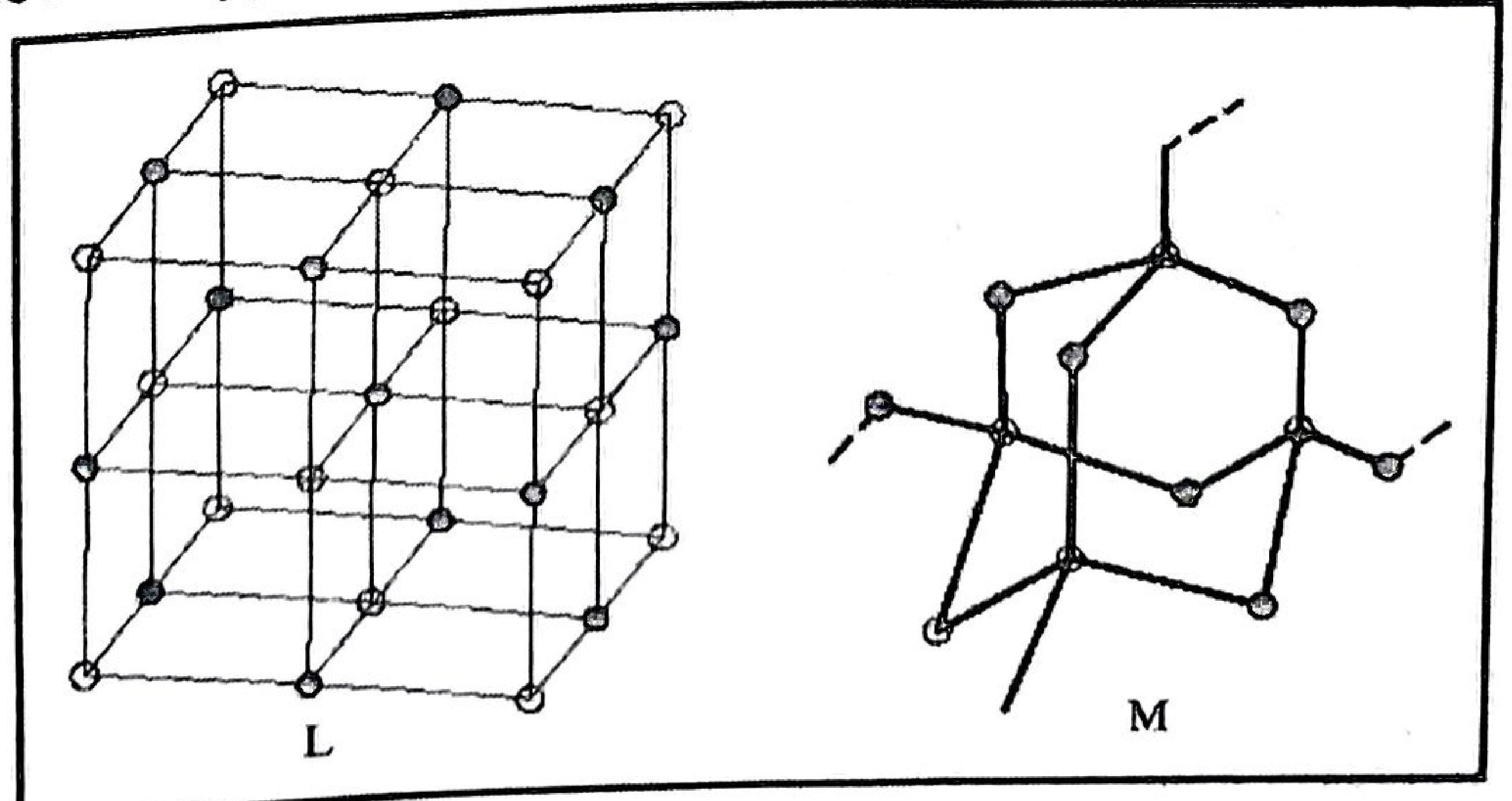
| Substance | L | M |
|---|---|---|
| Structure | ||
| Bonding |
25. State one physical property that would suggest the presence of each of the following gases from a leaking gas cylinder: (a) H₂S; (1 mark) (b) N₂O; (1 mark) (c) Cl₂. (1 mark)
26. (a) Give the names of the type of compounds whose reaction is described as: (i) esterification; (1 mark) (ii) saponification. (1 mark)
(b) State the importance of vulcanisation. (1 mark)
27. Figure 9 shows a setup used to separate a mixture of two liquids, Q (boiling point 117 °C) and R (boiling point 103 °C).
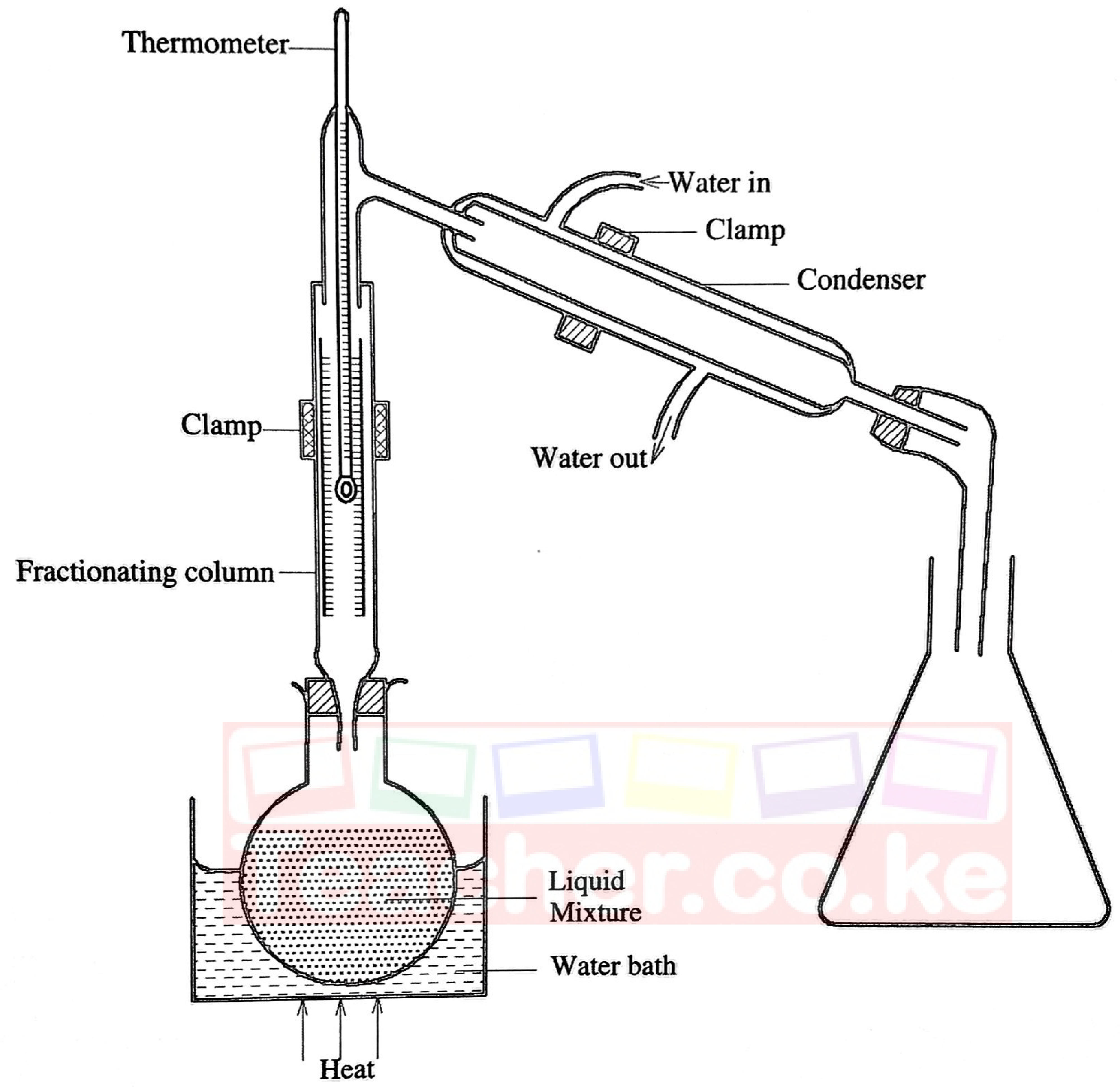
Identify three mistakes in this setup. Give a reason in each case. (3 marks)